CHATEAU DU RAYET: THE TRANQUIL CAPSTONE IN RURAL FRANCE
“It is simply the absence of unnecessary change that makes the château and the overall region so special”
- Gareth Rees
“We love the sense of history about the property; becoming one in a long line of custodians stretching back hundreds of years to the time when the Baron of Rayet lived in the château.”
- Becky Rees
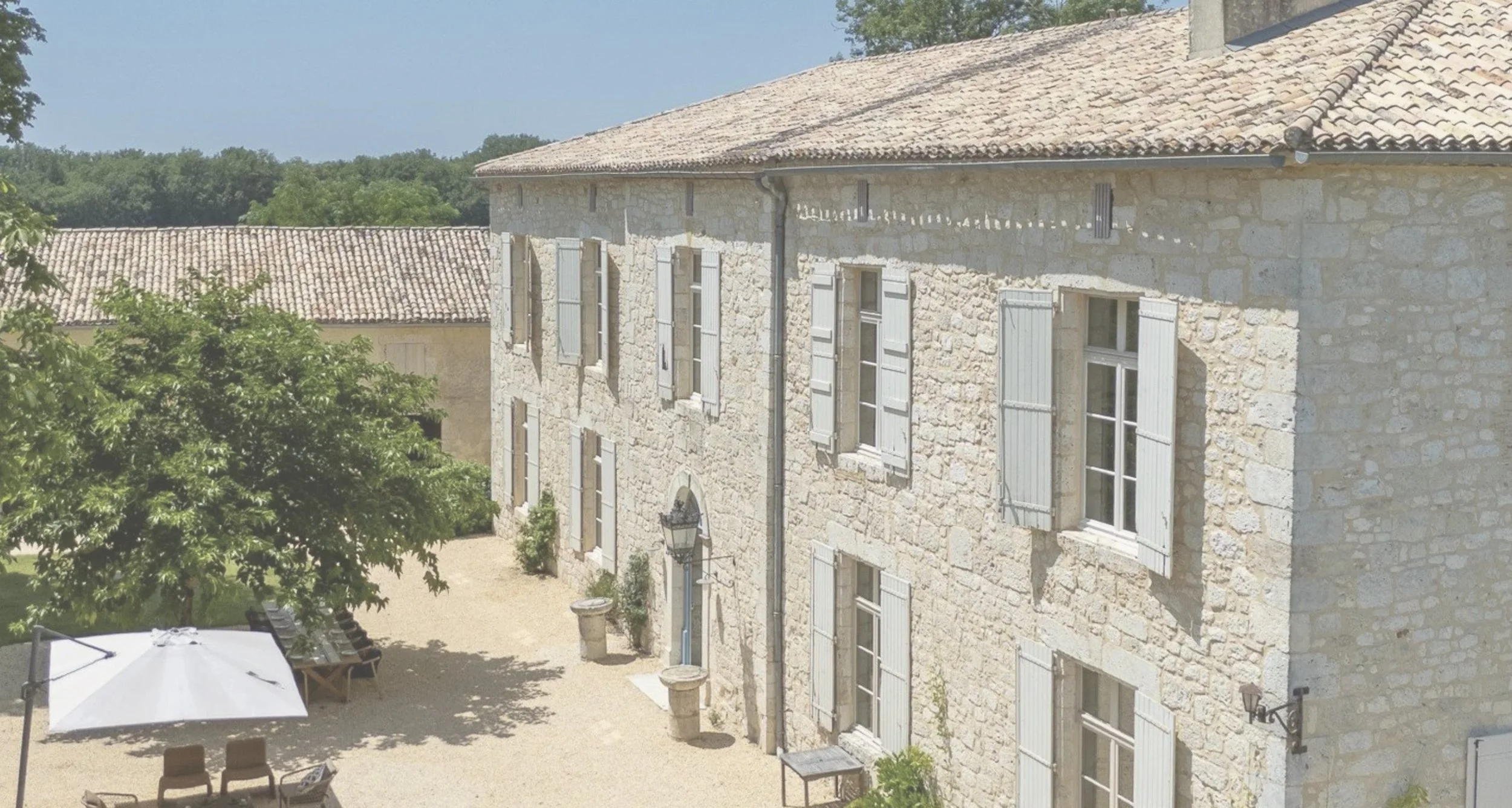
The beautifully restored 18th century Château du Rayet
INTRODUCTION
The building has stood for centuries, the surrounding landscape has changed remarkably little, and life still follows rhythms that would be instantly recognisable to those who lived here generations ago. This is Château du Rayet, built in the mid-eighteenth century by Jean de Paty, a member of the Parlement of Bordeaux, the kingdom's highest regional court. In 1736, royal letters patent issued at Versailles created him the first Baron de Rayet. Soon afterwards, he built the honey-coloured château as the seat and celebration of his newly created barony.
Château du Rayet sits close to the medieval bastide of Villeréal, where the landscapes of Lot-et-Garonne and historic Périgord meet. The countryside unfolds gently rather than dramatically. Vineyards follow the contours of low hills towards Bergerac. Walnut groves stand beside sunflower fields. Narrow lanes connect honey-coloured villages whose appearance has remained rustic and gentle over generations.
Farmers still work a patchwork of orchards, cereals and pasture, while life moves with a rhythm that feels wonderfully detached from the urgency of the modern world. It is a place of rare tranquillity.
That was the opportunity Gareth and Becky Rees recognised when they first discovered Château du Rayet. More than a beautiful château, they had found a timeless corner of rural France in which to create their family Capstone for generations to come...
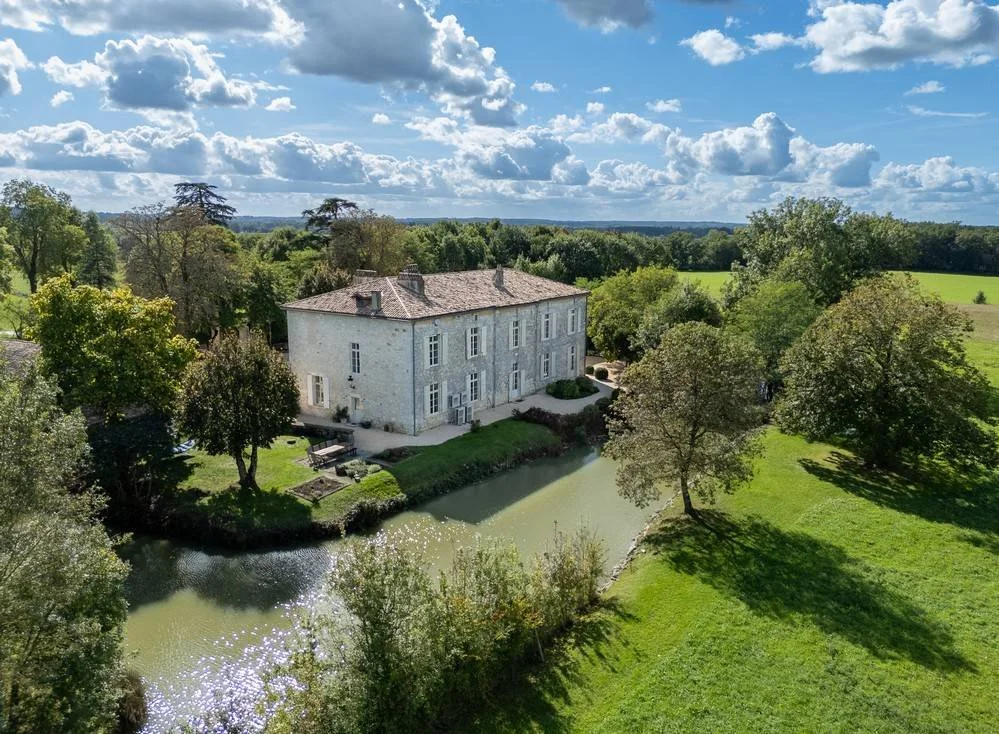
The Château’s moat
THE CHATEAU’S HISTORY
It has already led several lives. The château soon witnessed the upheaval of the French Revolution, during which Jean de Paty's son, Léonard, was executed at the guillotine in 1795. In the nineteenth century the estate passed to Joseph Miran, who returned from Argentina after building one of South America’s most successful pharmacy businesses. That became his own Capstone before the château quietly passed into another family's care.
Like many enduring places, each generation has left his own chapter before handing the château to the next.
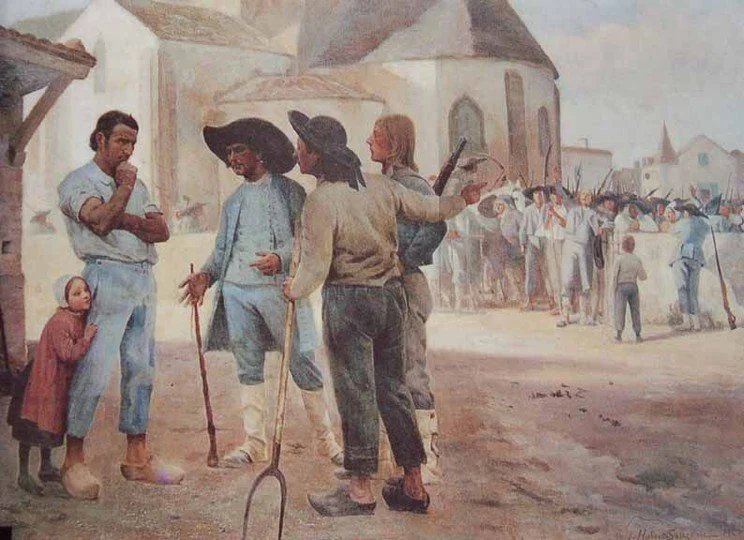
The french revolution playing a part in the château’s history
THE REES FAMILY CAPSTONE
More often a passion project involves recognising the enduring value of something that already exists and preparing it for another generation. The contribution is measured not by how dramatically something changes, but by how confidently it continues.
Purchased in 2021, the château represented far more than a beautiful French property. It was an opportunity to become custodians of a building whose history stretched back centuries and, through careful restoration, to prepare it for centuries still to come. Over the following three years the couple from Surrey, UK, undertook a careful restoration before welcoming guests once again in early 2024.
The work was extensive, but the philosophy behind it was restrained.
“We have always had the vision of our grand children’s grand children enjoying the Chateau, hopefully not as a burden but a place to make memories” says Gareth Rees. The objective was never to reinvent Château du Rayet. It was to understand it. Throughout the project Gareth and Becky resisted the temptation to impose themselves upon the château.
“We kept original features wherever possible, the honey-coloured stone carefully repaired and neglected spaces returned to daily life” says Becky Rees
That sense of continuity is one of the defining characteristics of this corner of south-west France. The region has long understood that some traditions are worth preserving, not because they are old, but because they continue to enrich everyday life.
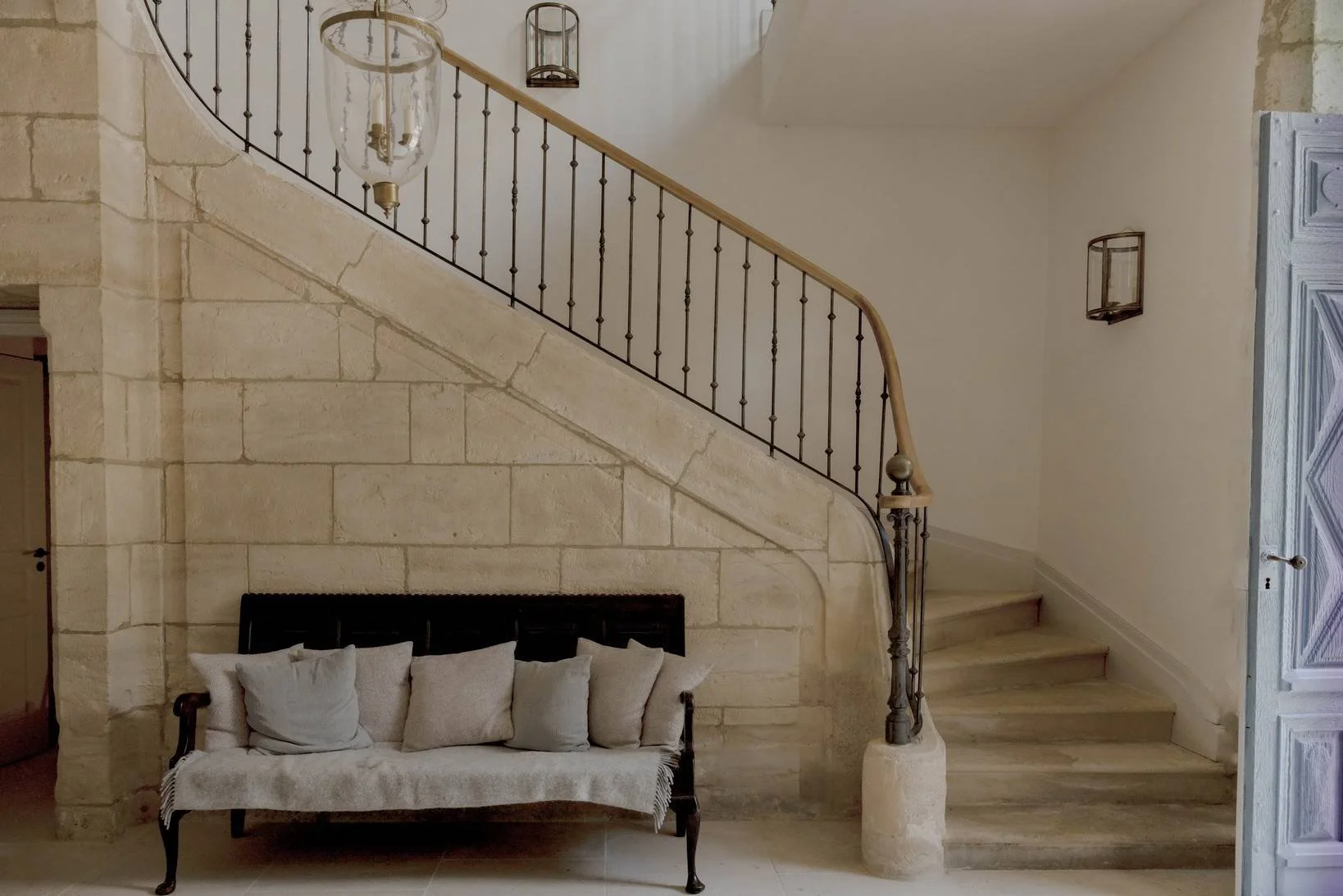
THE LANDSCAPE: NEITHER PRESERVED NOR MANUFACTURED
The landscape is distinctive- like the Cotswolds stone in the UK- it is the quality of the local limestone, glowing warmly in both the first and last light of the day. The landscape feels neither preserved nor manufactured. It simply continues.
"There is a golden glow that feels unique to the region. Best enjoyed in the early mornings and early evenings," says Gareth.
Those are the moments when Château du Rayet feels at its most magical. The restrained architecture of farmhouses, manor houses and village buildings seems to belong naturally to the landscape rather than dominate it, giving the entire region a quiet sense of harmony.
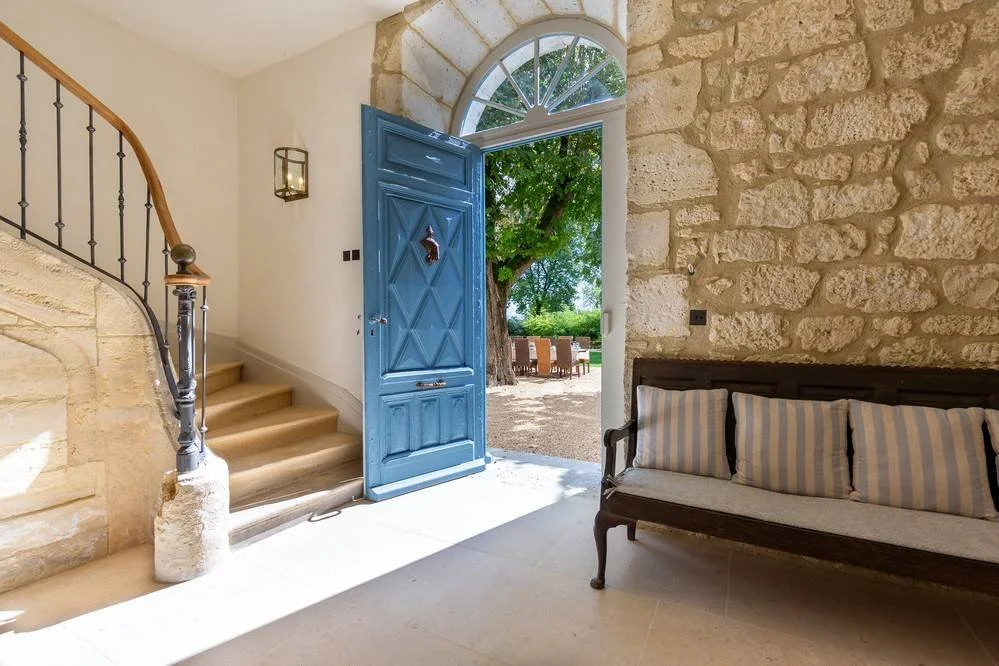
Throughout the region another detail quietly repeats itself. There is a certain shade of pale blue used on shutters and front doors that work beautifully against the warm stone of villages, farms and châteaux. The precise origins of this local tradition remain uncertain, but together they have become part of the architectural language of south-west France. Château du Rayet’s own blue entrance door sits comfortably within that tradition, connecting the house not only to its own history but also to the wider character of the surrounding countryside.
Standing either side of the entrance are two historic pigeonniers. To modern visitors they seem almost decorative, yet for centuries they represented something rather more practical. Across the Périgord and Agenais, pigeonniers housed birds (pigeons if you hadn’t guessed) whose meat supplemented the household while their droppings provided highly prized fertiliser for vineyards and crops. More subtly, they also reflected the standing of an estate. Before the French Revolution, substantial freestanding colombiers were associated with significant landowners, quietly signalling that the surrounding land was both productive and expected to remain within the family for generations.
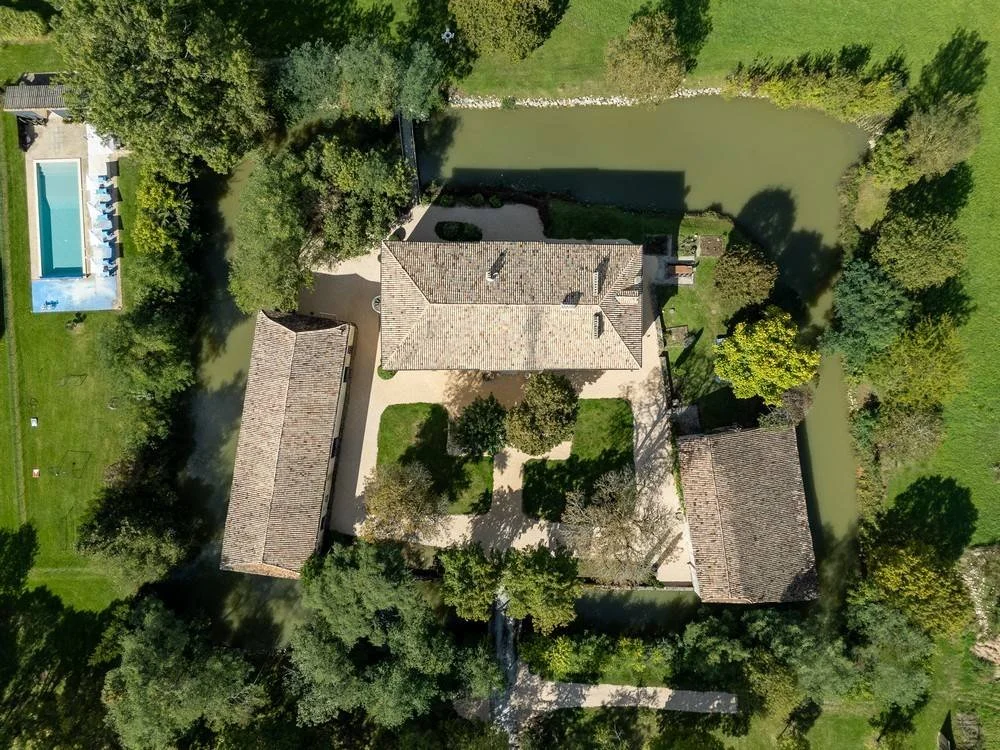
Château du Rayet from above
VILLEREAL
The nearby town of Villeréal helps explain why Château du Rayet feels so rooted in its surroundings.
Founded in 1265 by Alphonse de Poitiers, brother of King Louis IX, Villeréal was one of the great royal bastides established across south-west France. These were not settlements that evolved gradually over centuries but carefully planned towns, laid out with broad streets converging on a central market square. They were designed to encourage trade, attract new residents and strengthen royal influence across the region.
More than 750 years later, amazingly little has changed.
The classic timber market hall still dominates the square, just as it has done for generations. Every Saturday morning, local producers gather beneath its oak beams to sell vegetables, cheeses, walnuts, duck, honey, wine and flowers from the surrounding countryside. It is not a market recreated for visitors. It is a market town that continue to perform the roles for which they were founded almost eight centuries ago.
It is simply the weekly market. The same practical exchange between growers, producers and local families continues today much as it always has. Its crazy to think that the market has been running consistently for 700 years.
Many historic towns eventually become museums. Their buildings survive, but their original purpose gradually disappears beneath cafés, souvenir shops and guided tours. Villeréal has largely avoided that fate. It remains first and foremost a place where people live. Neighbours stop to talk beneath the market hall. Bakers continue to serve customers who arrive each morning for fresh bread rather than photographs.
For guests staying at Château du Rayet, this quickly becomes one of the defining pleasures of the experience. The journey into Villeréal each morning is short enough to become routine rather than an excursion. Warm croissants from the patisserie, fresh bread from the boulangerie, a visit to the butchers, and locally roasted coffee are collected.
A little further away lies Monflanquin, another of south-west France’s remarkable bastides. If Villeréal feels intimate and welcoming, Monflanquin possesses a stronger sense of authority. Built on its commanding hilltop, it reflects its historic role as an administrative centre, overlooking the surrounding countryside with quiet confidence. The two towns complement one another beautifully and together provide a reminder that this part of France contains some of Europe’s most complete examples of medieval town planning, still performing many of the functions for which they were originally created.
The countryside between them remains equally productive. Vineyards, orchards, walnut groves and pasture continue to shape the landscape much as they have done for centuries. Horses remain an important part of local life too. Villeréal’s racecourse, stud and equestrian training centre have earned it the affectionate description of La Bastide du Cheval, another example of a traditional rural industry adapting rather than disappearing.
Perhaps this is one reason why the region continues to attract people prepared to think long term with their passion projects.
A short drive north-west from Château du Rayet stands Château de Saint-Cernin, where Icelandic entrepreneur Róbert Wessman (pharmaceuticals again!) began what has become Maison Wessman. He did not arrive intending to build a significant wine business. The château was originally purchased as a family retreat, somewhere to enjoy the landscape and spend time cycling through the surrounding countryside. Architecturally, it carries another detail familiar across the historic châteaux of the wider region: a toit en poivrière, the steep conical ‘pepperpot’ roof crowning one of its turrets. Gradually, however, another idea began to take shape. The more he explored Bergerac and its vineyards, the more convinced he became that the region’s wines deserved far greater recognition than they enjoyed internationally.
That conviction eventually developed into Maison Wessman, a project that now extends well beyond producing excellent wine. Vineyard acquisitions, investment in winemaking, hospitality and exports all share a common objective: helping to raise the profile of Bergerac as a serious wine region in its own right rather than simply a neighbour of Bordeaux. Whether that ambition is ultimately realised almost feels secondary. What makes such projects interesting are the timescale over which it is being pursued. Owners plant avenues of trees they may never see at full maturity. They restore buildings whose next major restoration may not be required for another century. Continuity itself has become a luxury.
Our tasting at Maison Wessman reflected much the same philosophy. Bergerac wines were paired with trout, foie gras, duck, local cheeses, tomatoes and strawberries grown only a short distance away. The combinations were refined without becoming complicated. The emphasis remained firmly on local produce, careful craftsmanship and respect for the ingredients themselves.
It reinforced something that becomes increasingly apparent during any stay at Château du Rayet.
Silence has become a luxury. Time slows. Days are no longer measured by what can be achieved, but by what can be appreciated. Reinvention gives way to refinement, and there is little pressure to chase the next thing because this corner of France has spent centuries quietly perfecting what already exists.
By the end of a week, visitors often find themselves living at a noticeably different pace. Lunch becomes an occasion rather than a necessity. Evenings extend naturally because nobody is watching the clock. You enjoy the spontaneity of activities during the day ‘going with the flow’ rather than overplanning. There is always somewhere else that could be visited, another vineyard to discover or another village to explore, yet there is remarkably little pressure to do so.
That may be one of Château du Rayet’s quietest achievements. It allows people to stop feeling as though they are trying to make the most of their time, and instead simply enjoy it.
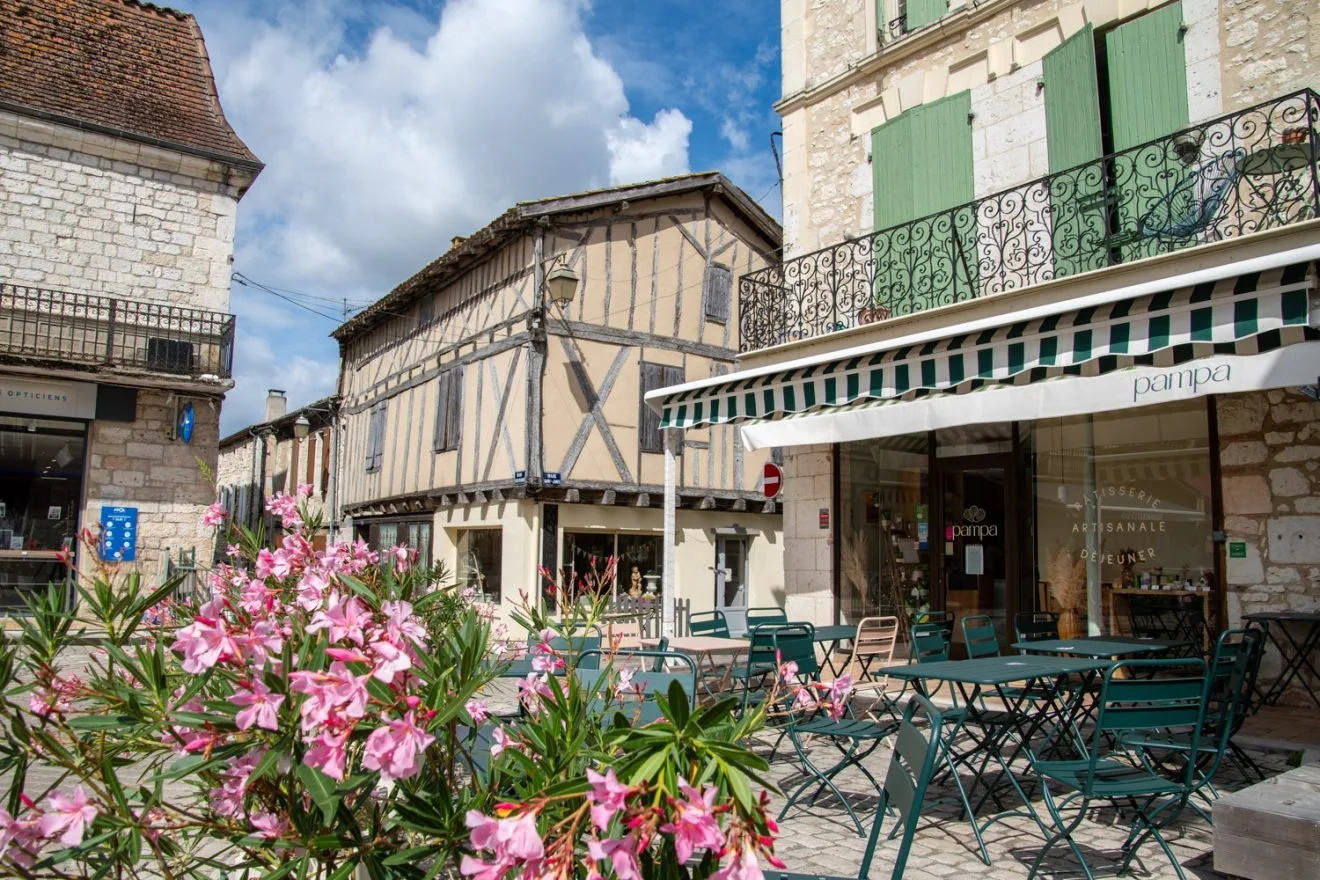
The bastide town of Villeréal
RINGS OF TRANQULITY
Tranquillity at the chateau arrives in rings. The first is the courtyard, creating a peaceful centre for family life. The second is the moat, marking the transition from the everyday to somewhere altogether quieter. Beyond that, as far as the eye can see, the surrounding fields stretch to the horizon. No developments, very limited signs of life except farmers going about the ebb and flow of production. Finally comes the greatest ring of all: the knowledge that you are deep within rural France, surrounded by landscapes that have remained remarkably unchanged for centuries. It’s 3 hrs to Bordeaux, there are just the small towns/ Bastides of Monpazier, Issiajac, and Bergerac. You feel surrounded by rural France. Calm, serene, unspoilt, work-like as farming goes on around you. Produce like Fois Gras, Aren Prunes, Perigord Duck. Centuries of perfecting rather than onto the next new thing.
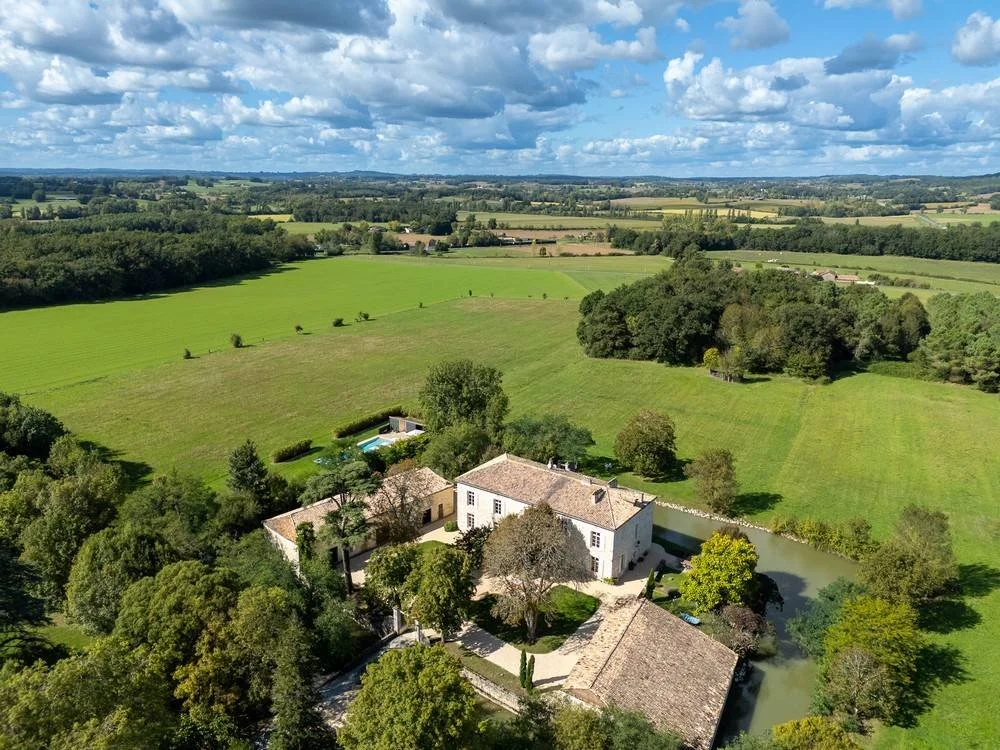
The rural landscape surrounding the château
THE PROJECT’S IMPACT
"It offers us something that has become increasingly difficult to find: a sense of permanence," says Gareth.
The ambition was always legacy. Only with time do these projects become something larger than their creators first imagined.
“We had a family recently stay whose grandparent ate in the local restaurant in Villereal Fromage 50 years ago. Its hugely rewarding to see families creating new memories in the chateau” says Gareth.
Ask Gareth and Becky what gives them the greatest satisfaction and they are unlikely to begin by talking about the restoration itself. They speak instead about the families who have stayed there, many returning to the region after years away, this time accompanied by children and grandchildren of their own. Others celebrate milestone birthdays, anniversaries or family reunions around the same dining table. Friendships deepen, children who first met beside the pool return a few years later noticeably older, and conversations often continue exactly where they left off.
“It is difficult to measure the value of those moments, yet they are ultimately what are transforming the house into something more significant” says Becky.
The reason to return is not to search for something new, but because one values what has remained reassuringly familiar.
Modern life encourages constant movement. Holidays become lists of places to visit rather than places to know. Successive destinations compete for attention, each promising something bigger, newer or more spectacular than the last. Yet some of life’s richest experiences emerge from repetition rather than novelty. Returning to the same market. Ordering from the same café. Watching children discover places that their parents first explored years earlier.
The French have long understood this instinctively. This Capstone does too.
FINAL THOUGHTS
Sometimes the greatest passion project is not creating something new, but becoming the best custodian of something already exceptional. Even better when they are your best friends and so you get to witness first-hand the process of their Capstone.
My friends and I have affectionately nicknamed Gareth and Becky ‘Le Baron and La Baronne’, a gentle joke that says as much about the warmth of the château as it does about its history...
For more information, please visit the Château du Rayet website HERE
Discover more