
CARRYING THE VISION: A 30-YEAR CAPSTONE
Dame Laura Lee and Thirty Years of Maggie’s
“Sometimes the most important projects are not yours to start, but yours to carry forward.”
— Dame Laura Lee
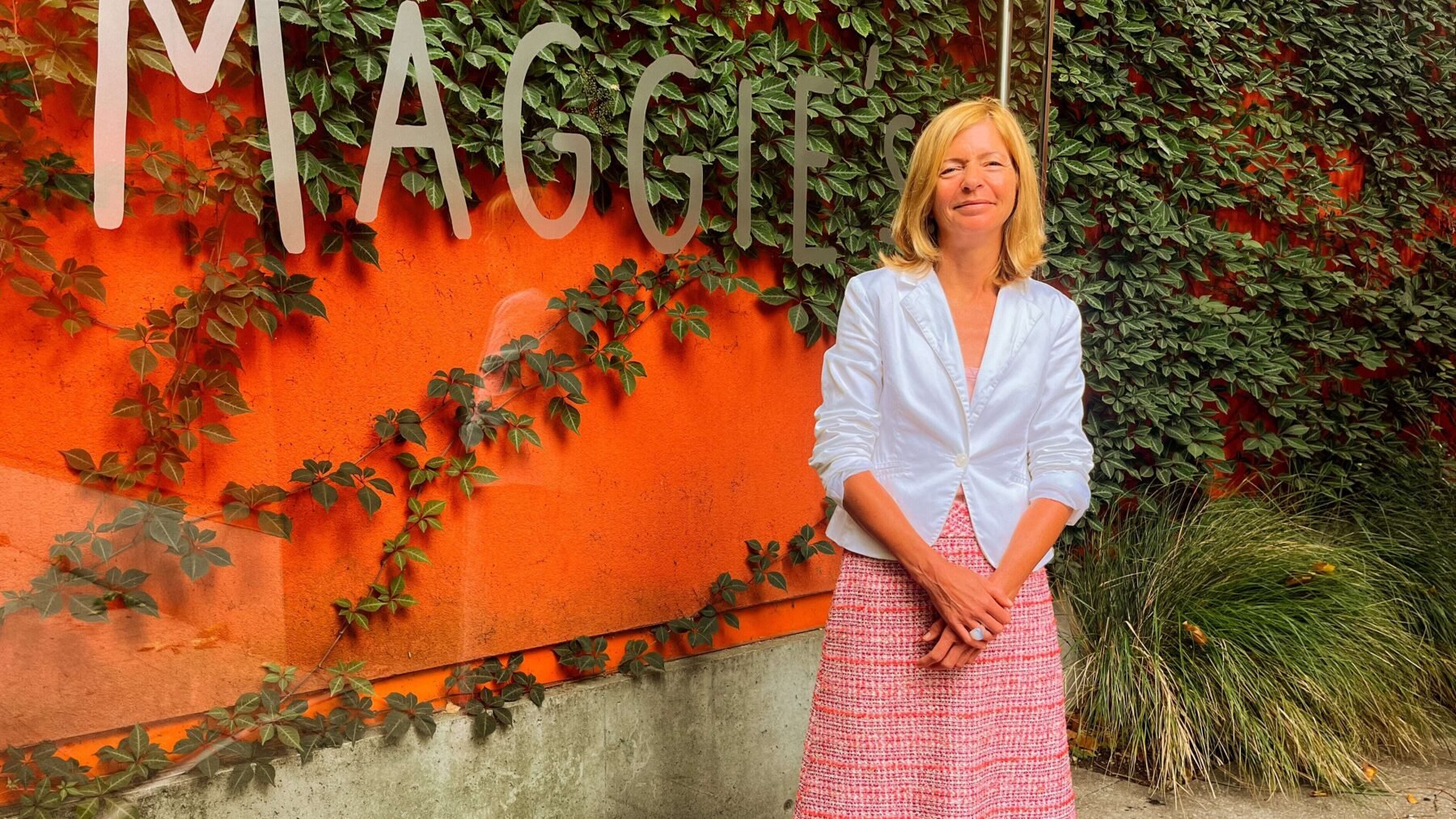
Image credit: Maggie’s
INTRODUCTION
Most meaningful projects begin when someone notices that something important is missing.
Thirty years ago, Maggie Keswick Jencks recognised that while cancer treatment in the UK could be exceptional, the experience of living with cancer often left people, and those closest to them, navigating fear, uncertainty and practical questions largely on their own. Her response was not simply to identify a gap. It was to imagine, and articulate something better.
If you’ve arrived here after scanning the QR code inside my book Capstones: The Art and Architecture of Meaningful Passion Projects, welcome. Perhaps you’re reading this while visiting one of Maggie’s Centres. Maybe someone shared this article with you. Or you’ve simply found it online. However you arrived, I’m glad you did.
While researching this article, I expected to learn more about one of Britain’s most admired charities. What I didn’t expect was to find myself returning repeatedly to Maggie’s original manifesto.
Reading it thirty years after it was written was a striking experience. It didn’t feel like an old document. It felt surprisingly current. More than that, I kept recognising ideas that have shaped my own thinking over many years: that people should become active participants in their own lives, that our surroundings influence how we think and feel, and that meaningful change often begins when someone decides not simply to observe a problem, but to do something about it.
Many meaningful projects begin with inspiration. Others begin with necessity. Maggie’s belongs firmly in the second category. It emerged directly from Maggie’s own experience of cancer and her determination that others should encounter something better than she had. Her vision was never simply to create beautiful buildings. It was to create places where people could rediscover confidence, community and a sense of possibility during one of life’s most difficult moments.
But this article isn’t about how Maggie’s began. It’s about what happened next.
Each time I’ve met Dame Laura Lee, I’ve come away with the same impression. There is very little about Laura contained in her answers. Conversations almost always return to Maggie, to the centres, to the people walking through the doors each day, or to the next challenge still to be solved.
Because while Maggie imagined a different kind of cancer care, Laura has devoted much of her professional life to making sure that the original intent never lost its way. It is a story of quiet determination, remarkable consistency, and a type of leadership that rarely seeks recognition.
CORNERSTONE: EARLY SIGNALS OF SERVICE
Dame Laura Lee rarely places herself at the centre of the story. She was born in South Africa to Scottish parents before growing up in Peterhead, in the north-east of Scotland. At seventeen, she left home to train as a nurse. It wasn’t an obvious decision, nor one that everyone around her understood. Even her mother questioned whether she possessed a natural gift for caring.
Looking back, something is fitting about that uncertainty. Some of life’s most significant decisions make sense only with hindsight.
According to Dame Laura:
“I still to this day can’t really articulate why I left home to be a nurse, but something drove me to pursue the nursing path. Nothing in my childhood suggested I would end up in the world of care…. I was not afraid to follow what I believed in.”
What strikes me about that reflection is its simplicity. There is no grand narrative about destiny or purpose, just someone following an instinct that felt right. It would be easy to describe nursing as Laura's career. Looking back now, it feels more like the beginning of the journey she is still on today. At the time, of course, nobody could have known where that decision would lead. Least of all a seventeen-year-old leaving home for the first time. Yet that first step eventually led to another. Then another. Until one day, it placed her in the room with Maggie Keswick Jencks.
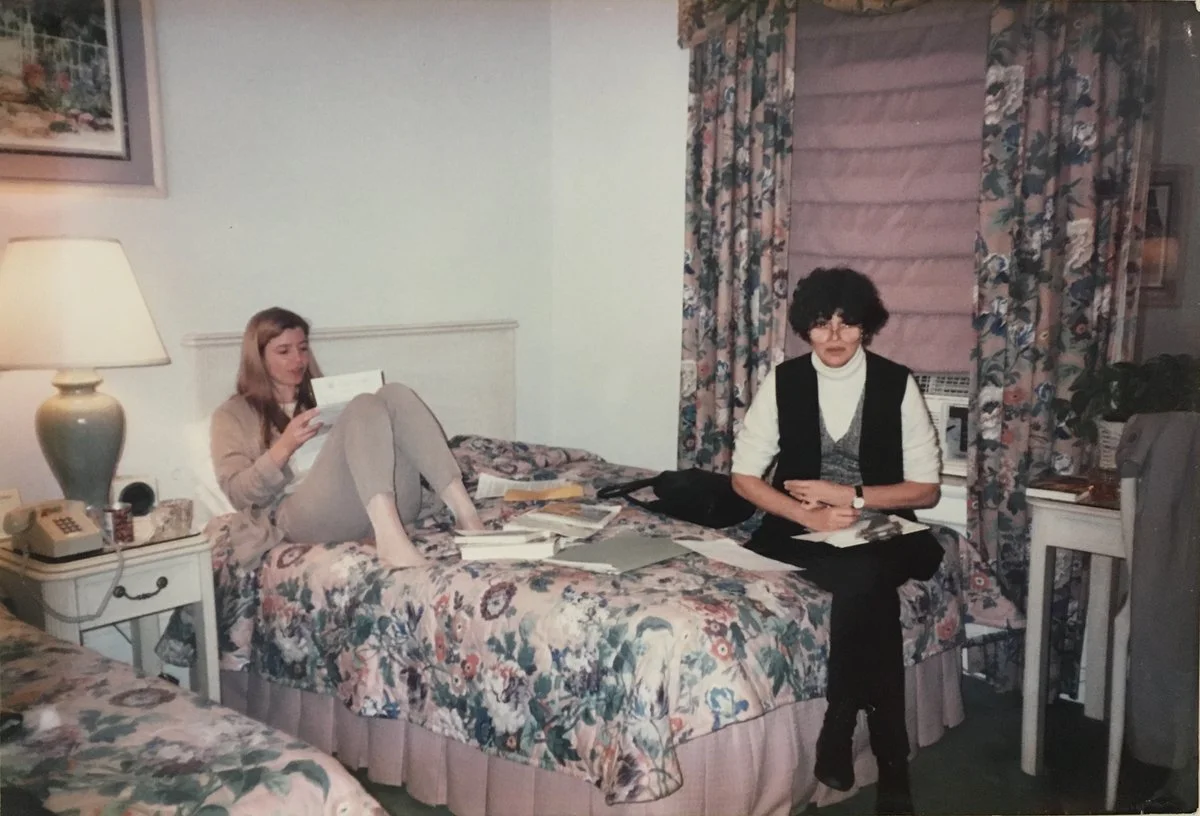
Maggie and Dame Laura Lee Image Credit: Maggie’s
KEYSTONE: WHEN PROXIMITY BECOMES PURPOSE
What began as a relationship between nurse and patient gradually became something much richer. Their conversations moved beyond treatment and towards possibility. They spoke about what people actually experience after a diagnosis, about the role that environment plays during moments of vulnerability, and about how care might extend beyond medicine alone.
As Laura recalls:
“Maggie and I bonded over identifying what could be improved for others. It was her ability to express what she saw could be changed and take it forward…she was a visionary and ahead of her time in cancer care.”
Reading Maggie’s manifesto alongside those conversations, it becomes clear that she wasn’t simply describing an idea for a building. She was articulating a different philosophy of care, one where people weren’t passive recipients of treatment but were encouraged to become active participants in living well despite cancer. One sentence, in particular, stayed with me:
“Being alive means doing.”
It captures so much of Maggie’s thinking. Not optimism for optimism’s sake, but the belief that even in the most difficult circumstances, people should be supported to find their own way forward, in their own way and at their own pace.
What also comes through, both in the manifesto and in Laura’s recollections, is Maggie’s remarkable ability to bring people with her. She didn’t simply have a compelling idea. She communicated it with such clarity and conviction that others wanted to become part of it.
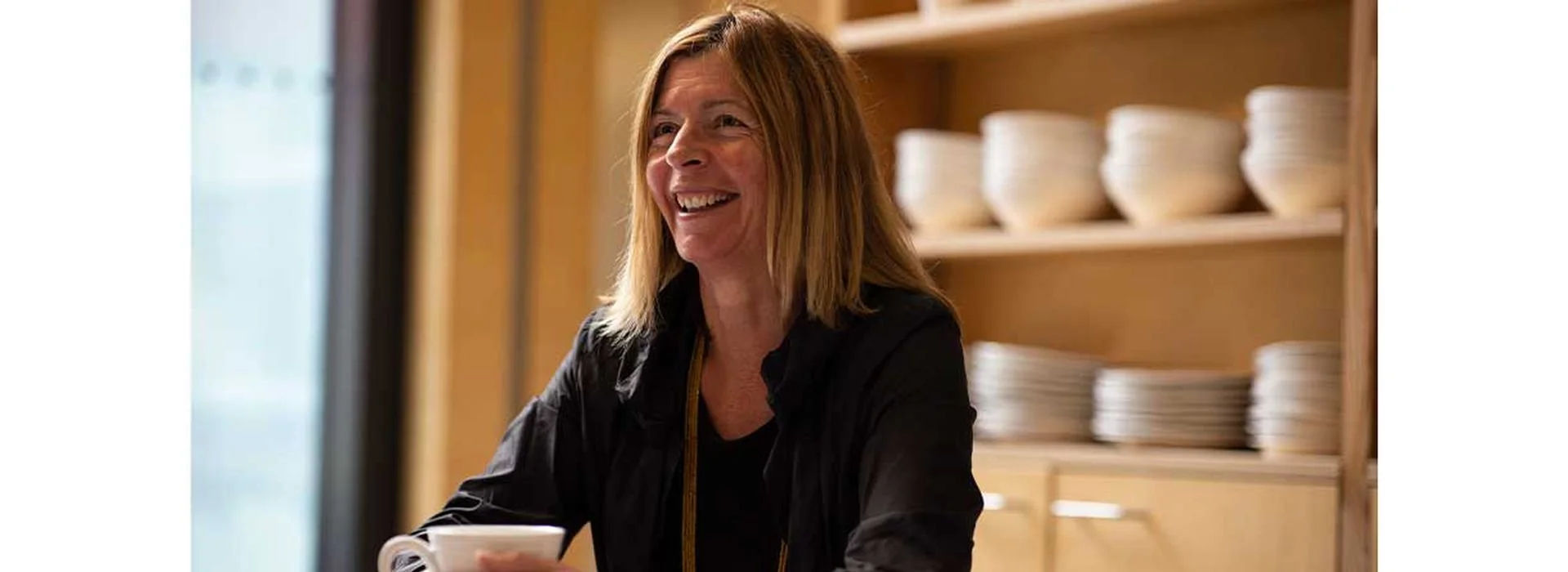
Image credit: Maggie’s
Laura often talks about “catching Maggie’s excitement”, and I found that a wonderful way of describing it. The idea wasn’t imposed. It was shared. Architects, clinicians, fundraisers, volunteers and supporters all found their own place within it, each contributing to something that had become bigger than any one individual.
At just twenty-five, Laura made a decision that would shape the next thirty years of her life. She left the NHS to help bring Maggie’s vision into reality. There was no established organisation, no proven funding model and no certainty that it would succeed. There was simply an idea that felt too important to ignore. Looking back, Laura doesn’t describe the decision as brave.
“What seemed like a bold decision really wasn’t; it all happened so naturally, and when you see there is a clear direction in front of you, taking steps forward just becomes right.”
Perhaps that’s the point. Looking back, we often assume defining moments announce themselves as such. More often they simply feel like the next step. Only years later do we appreciate where they eventually led.
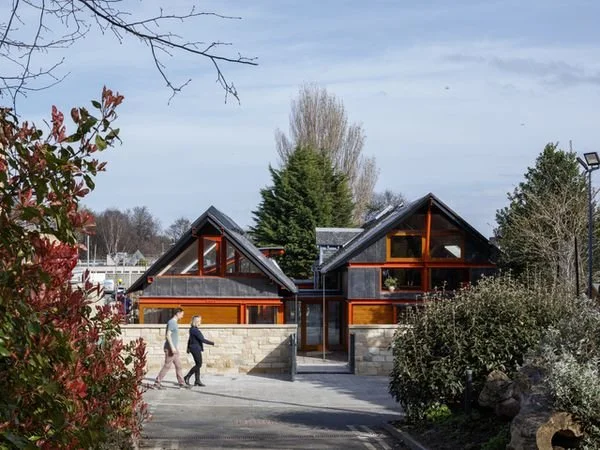
The first Maggie’s Centre: Edinburgh, built in 1996
CAPSTONE: THIRTY YEARS OF STEWARDSHIP
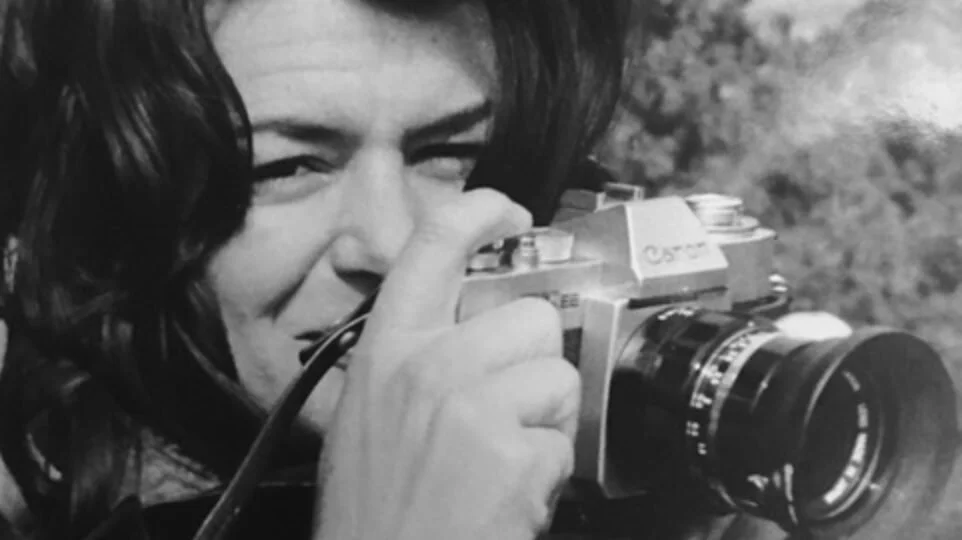
Maggie Keswick Jencks Image Credit: Maggie’s
“I did not expect to be 30 years down the line having helped provide care for four million people. I think Maggie would be amazed...”
– Dame Laura Lee
As I reached this point in Laura's story, I found myself thinking less about growth and more about stewardship. We naturally celebrate the moment something begins. Founders, entrepreneurs and pioneers are rightly recognised for creating something from nothing. Yet spending time with Laura made me realise that beginning is only half the challenge. The harder task is preserving the original intent as an organisation grows, adapts and responds to changing needs without losing sight of why it existed in the first place. That, to me, has been Dame Laura Lee’s defining contribution.
The first Maggie’s Centre opened in Edinburgh in 1996. Today, the charity has grown into a network of centres located alongside major NHS cancer hospitals across the United Kingdom, supporting millions of people living with cancer. Despite that growth, what struck me most after reading Maggie’s original manifesto was not how much had changed, but how much had stayed the same. The language of dignity, participation, thoughtful design, and encouraging people to find their own way remains as relevant today as it was three decades ago. Organisations often evolve to the point where their founding ideas become difficult to recognise. Maggie’s has achieved something rather unusual. It has expanded significantly while remaining consistently faithful to the principles that inspired it.
Laura describes her role with characteristic modesty:
“My role has been to work with others to build it, protect it, and extend it without losing what made it matter in the first place.”
I suspect many Chief Executives would instinctively describe what they have built. Laura describes what she has protected. That difference may seem subtle, but I don’t think it is. It reflects a style of leadership that is concerned less with leaving a personal legacy and more with ensuring that someone else’s philosophy continues to serve others exactly as it was intended.
You can see that approach expressed in every Maggie’s Centre. Each building has been designed by a different architect, each with its own personality and architectural language, yet they all feel unmistakably like Maggie’s. Reading the manifesto helped me understand why.
Maggie never regarded architecture as an end in itself. It was a means of creating environments where people could regain confidence, ask difficult questions, and find their own way through one of life’s most difficult experiences. The buildings are memorable not because of who designed them, but because of how they make people feel.
Laura often returns to one simple observation:
“We’ve always grown carefully. The need has always been ahead of us."
That single word, carefully, probably explains Maggie’s better than any strategy document ever could. Growth has never been presented as success in its own right. It has simply reflected the reality that more people need support than Maggie’s can currently reach.
“The beauty is that there has always been more to do. Now it’s become clear the goal: to get to 60 centres. We don’t want to be part of a country where there isn’t a Maggie’s for support.”
There is something practical about that ambition. It isn’t about becoming larger for the sake of it. It is about ensuring that access to this kind of support is no longer determined by where someone happens to live. Thirty years after Maggie articulated a different way of thinking about cancer care, Laura continues to apply the same principle: identify what is missing, then patiently build towards a solution without compromising the original philosophy.
Looking back across those three decades, what impresses me most is not simply the number of centres that now exist, but the consistency of purpose that connects them. Maggie imagined a different kind of cancer care. Laura has spent thirty years ensuring that idea has remained recognisable, relevant and available to millions of people Maggie herself would never have met.
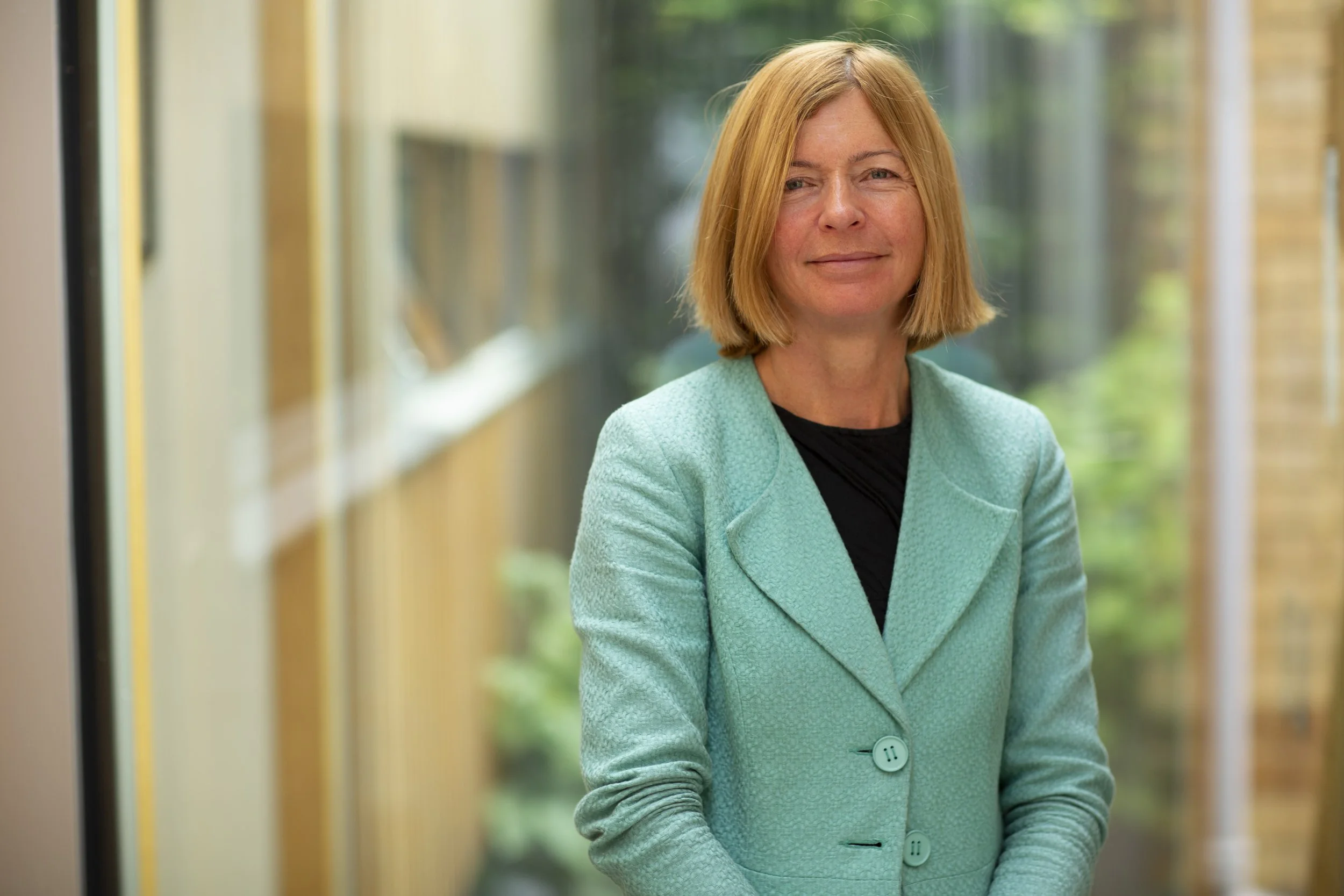
Image credit: Philip Durrant
REFLECTIONS
Thirty years after the first Maggie’s Centre opened, what strikes me most is not simply what has been built, but what Dame Laura Lee has been able to preserve through careful stewardship. The philosophy Maggie articulated in 1995 remains visible throughout every centre because it has been protected with remarkable consistency as the charity has grown.
Laura describes that responsibility with characteristic humility:
“With such a strong vision, followed by the snowball of the centres opening, really my role has been to steward and remain true to the original vision. And the beauty is that everyone can contribute in some way, from the signature architects to those giving their time to open or close a centre each day.”
That observation stayed with me because it captures something much bigger than Maggie’s. The charity has never been built by one individual. Architects have shaped remarkable buildings. Clinicians have shared their expertise. Fundraisers, volunteers, donors and staff have all played their part. Most importantly, every person who walks through the door is encouraged to find their own way through the experience of cancer, supported by people and places designed to help them do exactly that.
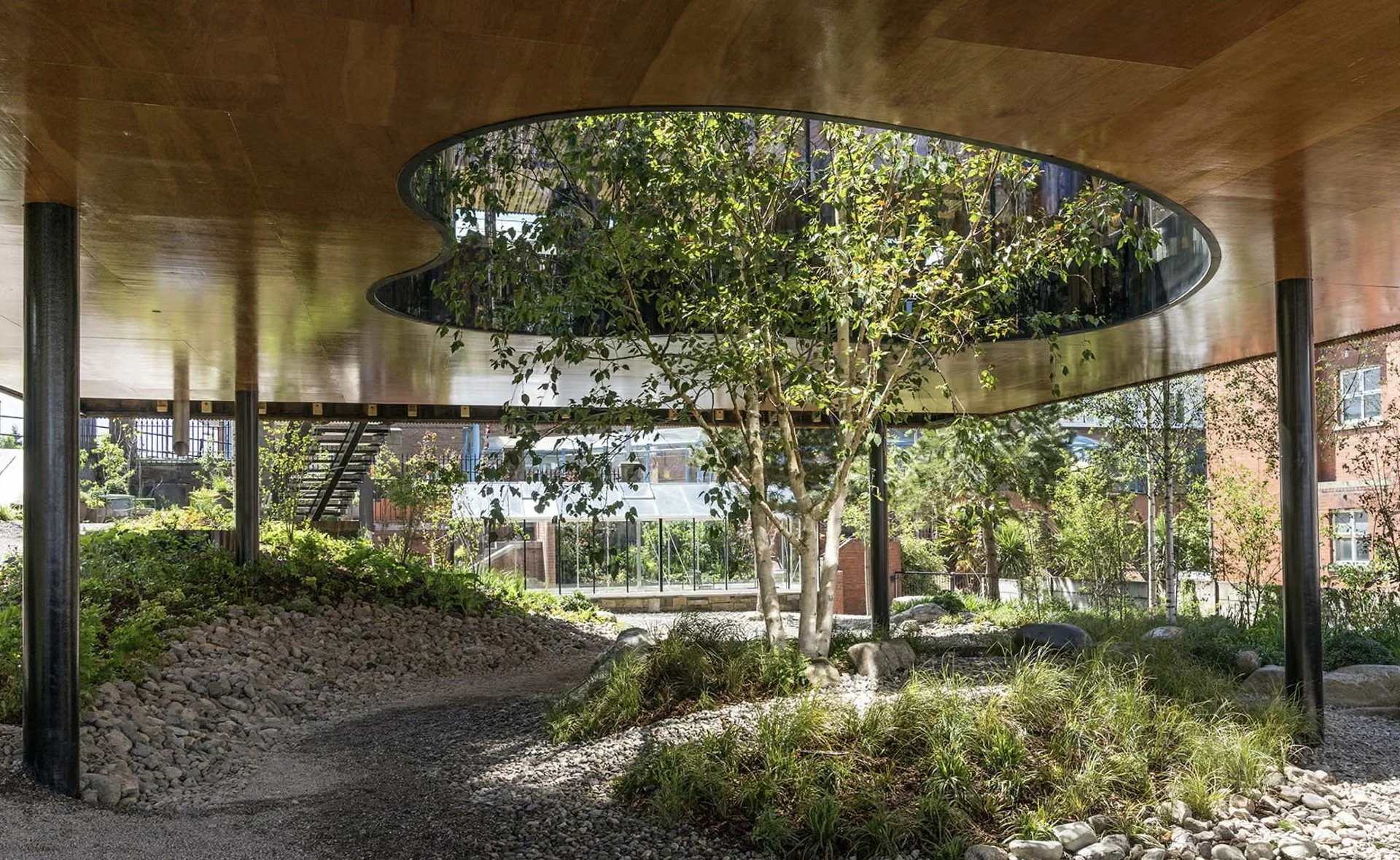
Image Credit: Maggie’s Oldham designed by architecture studio dRMM
Laura reflected on this when she said:
“We are all best when we are part of something bigger than ourselves. It’s such a cliché but it’s simply true. I was lucky in that Maggie and Maggie’s has enabled that for me. Maggie’s has never attempted to replace the NHS. It complements it, recognising that treating cancer and helping people live with cancer are different, but equally important, forms of care.”
It also demonstrates that growth does not have to come at the expense of humanity. Each new centre extends the reach of the original philosophy without losing the warmth, dignity and optimism that made the first one so distinctive. That is far harder to achieve than simply opening more buildings.
As I finished writing this article, I found myself returning to one simple thought. We often assume that meaningful projects have to begin with our own idea. Laura’s story suggests something different. Sometimes the most significant contribution we can make is recognising an extraordinary idea and choosing to dedicate ourselves to carrying it forwards.
Today, Maggie’s ambition is to grow to 60 centres, ensuring that expert support sits alongside every major cancer hospital in the UK. It is not a departure from Maggie’s original philosophy. It is its natural continuation.
There is a phrase Maggie’s has used for many years: Marching On.
Reading Maggie’s manifesto today, I suspect she would recognise every Maggie’s Centre that has followed. To me, that is the truest measure of Dame Laura Lee’s stewardship. Not that she changed Maggie’s idea, but that after thirty years she has ensured millions of people have been able to experience it, contribute to it and, in turn, carry it forwards.
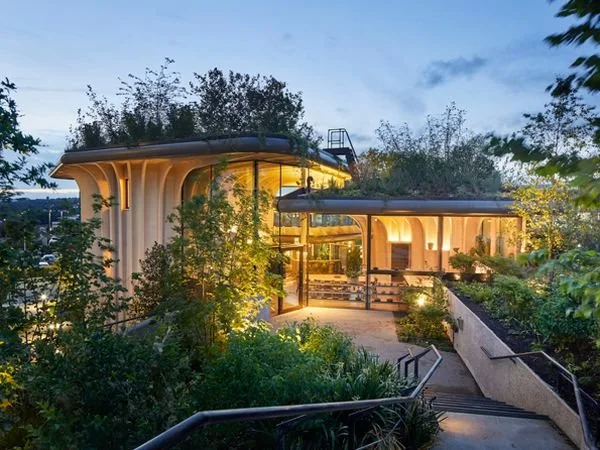
Maggie’s Yorkshire: Designed by Heatherwick Studio
Discover more


