CAPSTONES OF THE COTSWOLDS
Passion Projects in England’s Golden Hills
“It wasn’t a plan, more a feeling that this land had a different future in it”.
Fiona Shiner, Founding and owner of Woochester Valley Vineyard, Cotswolds.
Photographer: Bob Jenkin
INTRODUCTION
Each year I make a pilgrimage to a special part of the English countryside. Since 2001, I have travelled to the Cotswolds. I dip in and out of the spa town of Cheltenham for the horse racing festival, known simply as “Festy”, the jewel in the crown of jump racing, along with 250,000 other racegoers.
The yearly trip marks the start of spring. Daffodils in bloom line the verges, the evenings stretch longer, and the birds grow louder. Nature begins to reawaken with the optimism of summer ahead. Often it is the first real warmth of the sun after a long winter. It is a magical time of year. There are few better places to witness that shift than the Cotswolds. When the sun lands here, the landscape feels almost Edenic.
I use the trip to think. To reset. To zoom out.
This year I am writing from Woodchester Valley Vineyard, Fiona Shiner’s Capstone. Looking out across the vines, it is easy to forget that twenty years ago this was simply pastureland. After discovering references to vineyards in the area in the Domesday Book, and following her own research, she planted the first acre in 2007. It was not an obvious decision. Like so many projects, it was a leap of faith.
More on that shortly.
While the Cotswolds presents itself as one of the most traditional corners of England, a place where history feels literally set in the local stone, something more contemporary is quietly unfolding beneath the surface.
At first glance, it feels timeless. Honey-coloured limestone villages sit gently in the folds of rolling hills. Sheep graze across ancient pasture. Market towns still gather around medieval squares that once traded wool across Europe. Bourton-on-the-Water, Stow-on-the-Wold, Broadway and Tetbury feel almost untouched.
Yet beneath this postcard landscape, clusters of Capstones are emerging, ideas branching out across these hills like nodding spring daffodils.
Across the Cotswolds, individuals are building projects that reflect their passions. Vineyards, organic farms, football clubs, distilleries, restaurants, pub guides. Each is rooted in the unique assets of the region, whether land, produce or culture. Once you begin looking through this lens, they become visible everywhere.
As explored throughout my book Capstones: The Art and Architecture of Meaningful Passion Projects, these are not conventional businesses. They are personal endeavours. Often pursued after success elsewhere. They are driven less by commercial logic, more by curiosity, values, or long-held fascinations.
The Cotswolds have quietly become one of the most desirable countryside addresses in the world. And when people arrive, something shifts. For many, it becomes a kind of laboratory. A place to test ideas, to express identity, to build something that reflects who they have become. For some, it is a brand-new chapter. For others, a return home.
I have seen this pattern accelerate in recent years, driven in part by international buyers, particularly from the United States, who now account for a meaningful share of high-end property transactions in the region.
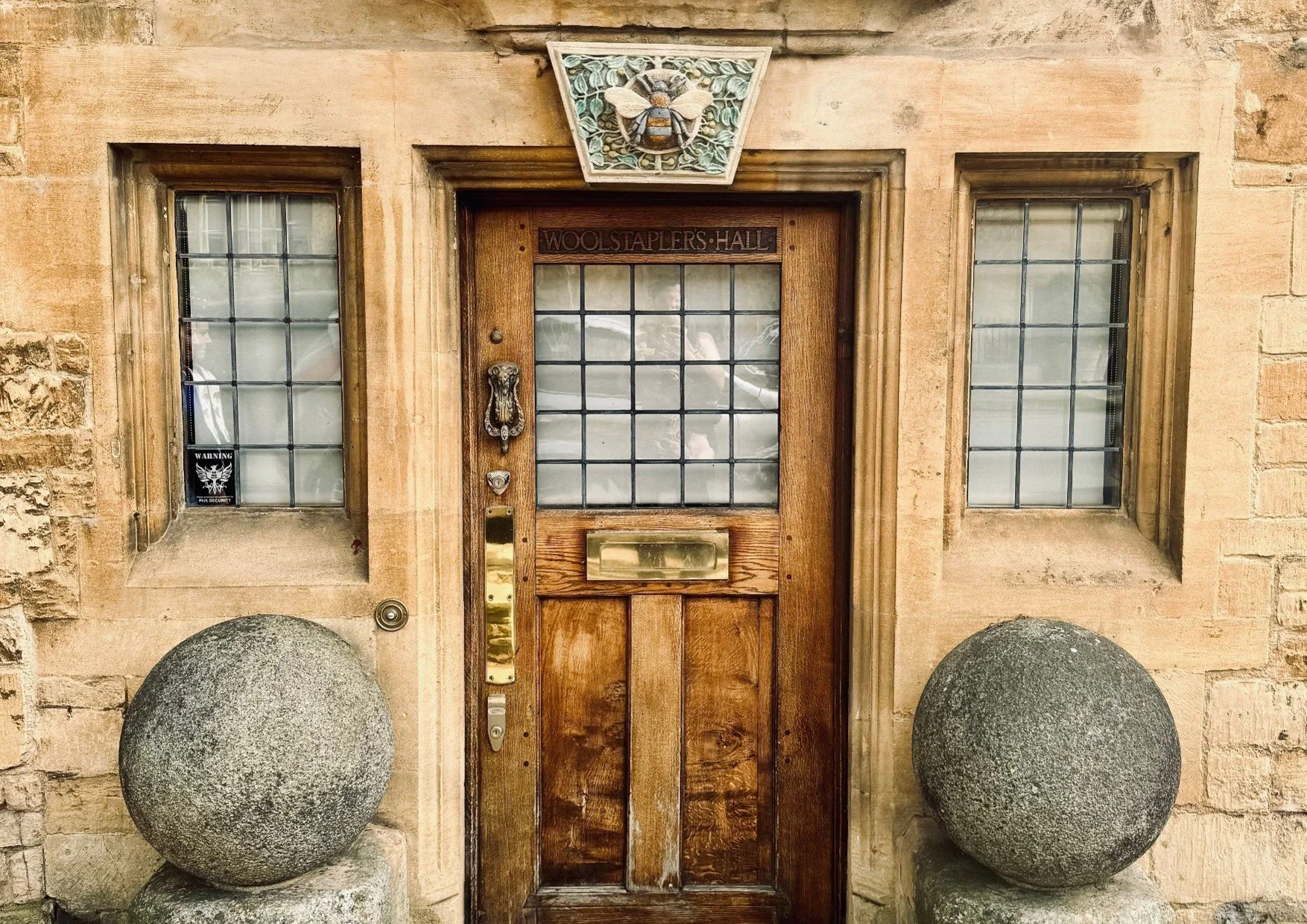
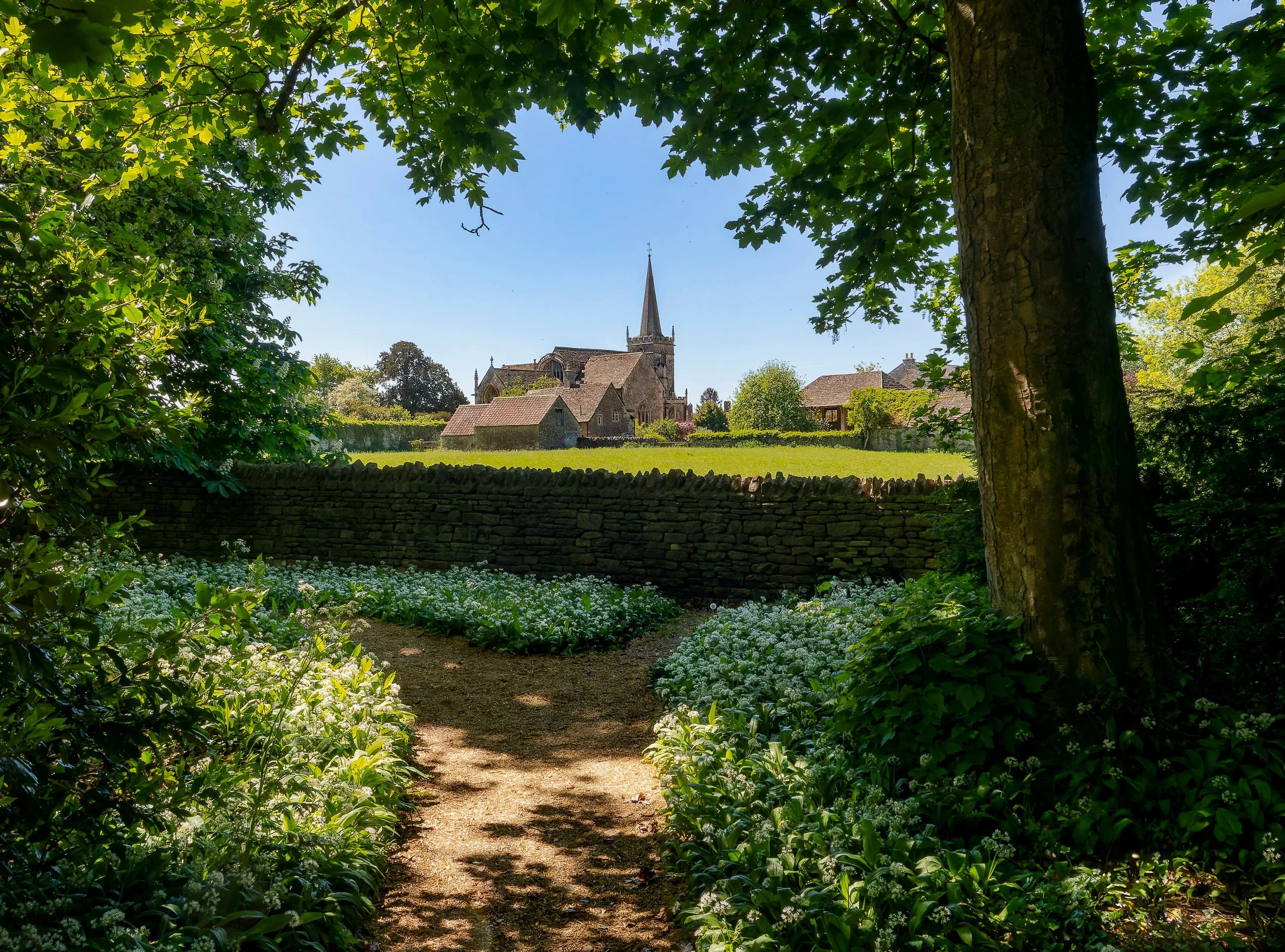
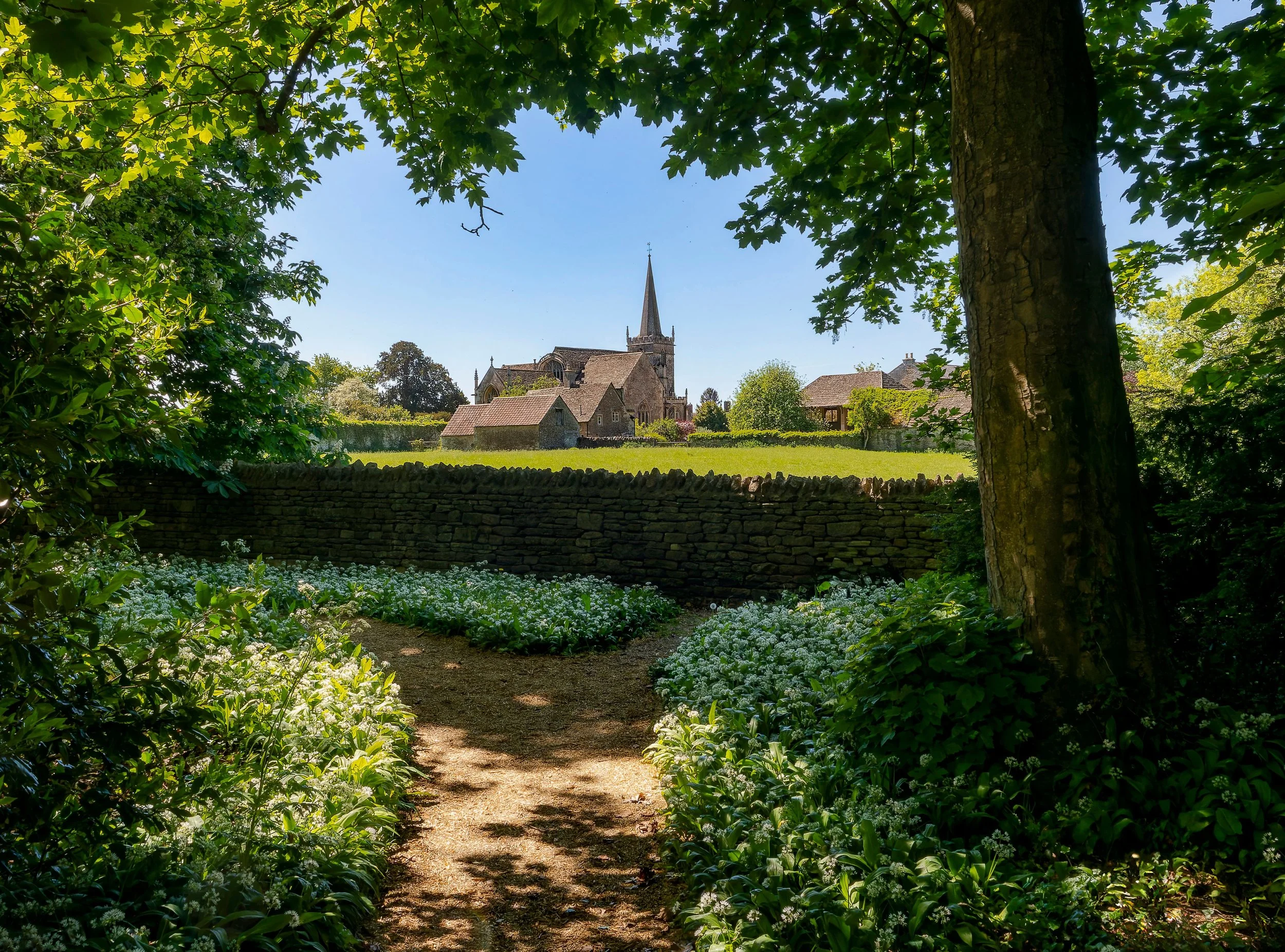
The iconic honey-coloured Cotswold stone
WHY THE COTSWOLDS?
To understand why this region has become fertile ground for such projects, it helps to understand what it represents.
Designated an Area of Outstanding Natural Beauty, the Cotswolds stretches across Gloucestershire, Oxfordshire, Worcestershire and Warwickshire. The name itself combines “cots”, meaning sheep enclosures, and “wold”, meaning rolling hills.
Its early wealth was built on the wool trade during the medieval period, particularly between the 12th and 16th centuries. This prosperity funded the churches, halls and market towns that still define the landscape today.
When the Industrial Revolution gathered pace, the region was largely bypassed. Faster rivers elsewhere powered mills more efficiently, and later coal and steam shifted economic activity away. In losing out, the Cotswolds preserved itself. What remains is the result of being left alone.
The architecture of the Cotswolds is itself an early example of this philosophy. Wealth was translated into structures designed to endure. Built with care and permanence. The result is a landscape where beauty has held its ground over time.
Today, that same environment attracts entrepreneurs, investors, athletes and global figures seeking privacy, nature and perhaps perspective.
The result is a blend of old and new. Farmers, founders, chefs, artists and investors sharing the same terrain. Not without some tensions I am sure. But here we focus on the positives.
People come here for a different rhythm of life. And therefore it is precisely the sort of environment where individuals begin asking different questions about their lives.
What should I build next?
Where will meaning come from?
What does this next chapter look like?
This landscape seems to invite those questions. And, in turn, it benefits from the answers.
Here I outline my top ten of those that I have experienced, enjoyed, admired, or stumbled upon during my annual immersion into the Cotswolds. There are many others I left off the list, the likes of Thyme, the elegant manor house hotel with fine dining and lush gardens, lovingly restored and managed by the Hibbert family, or Hyll, the restored 14th-century manor house hotel designed for unhurried days. Both worthy of their own exploration and write-up (watch this space).
What follows is not just a list but a cross-section. Ten different answers to the same question: What do you build when you no longer have to?
TEN COTSWOLDS CAPSTONES
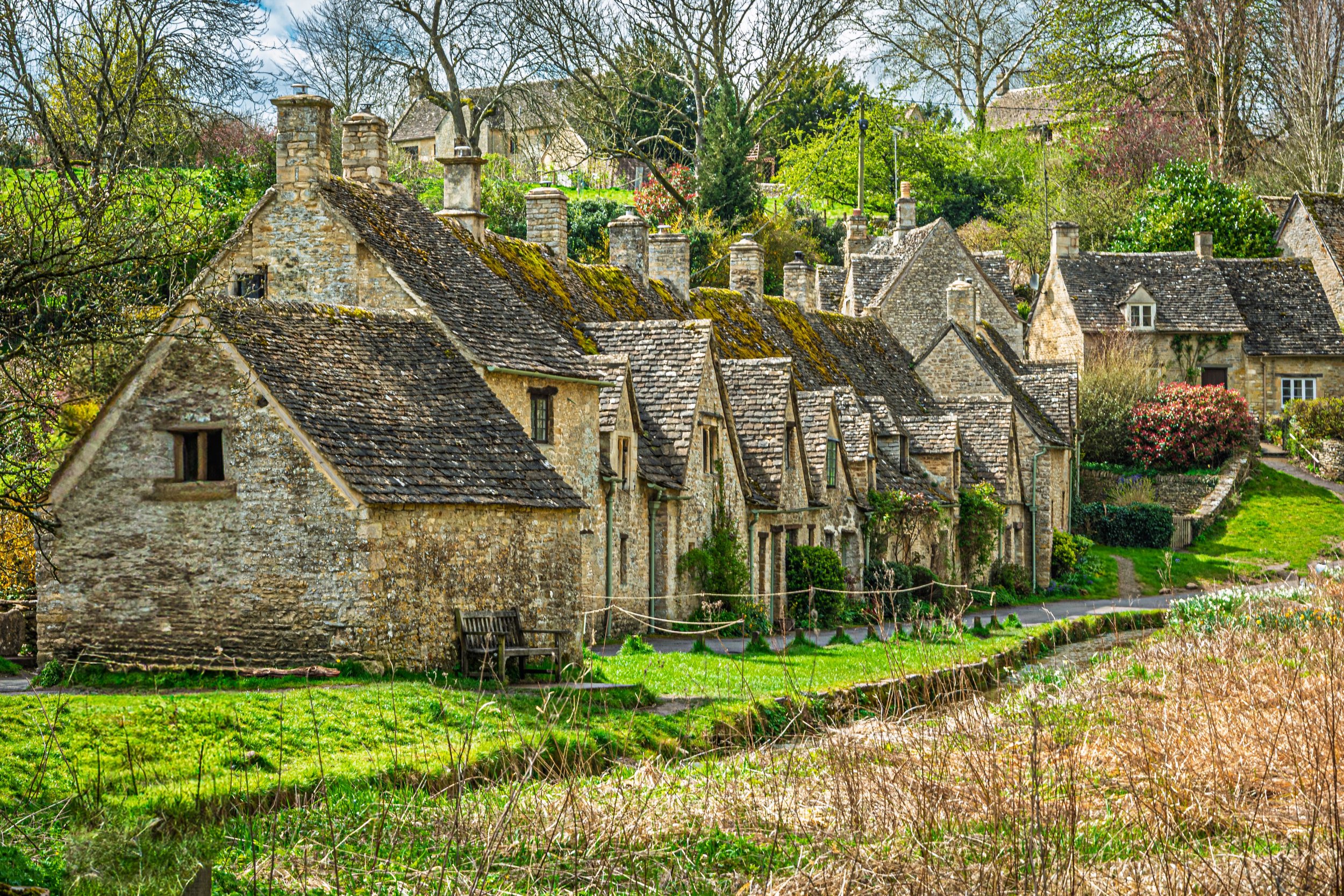
Timeless architecture with modern ambitions
1) Daylesford: The organic pioneer
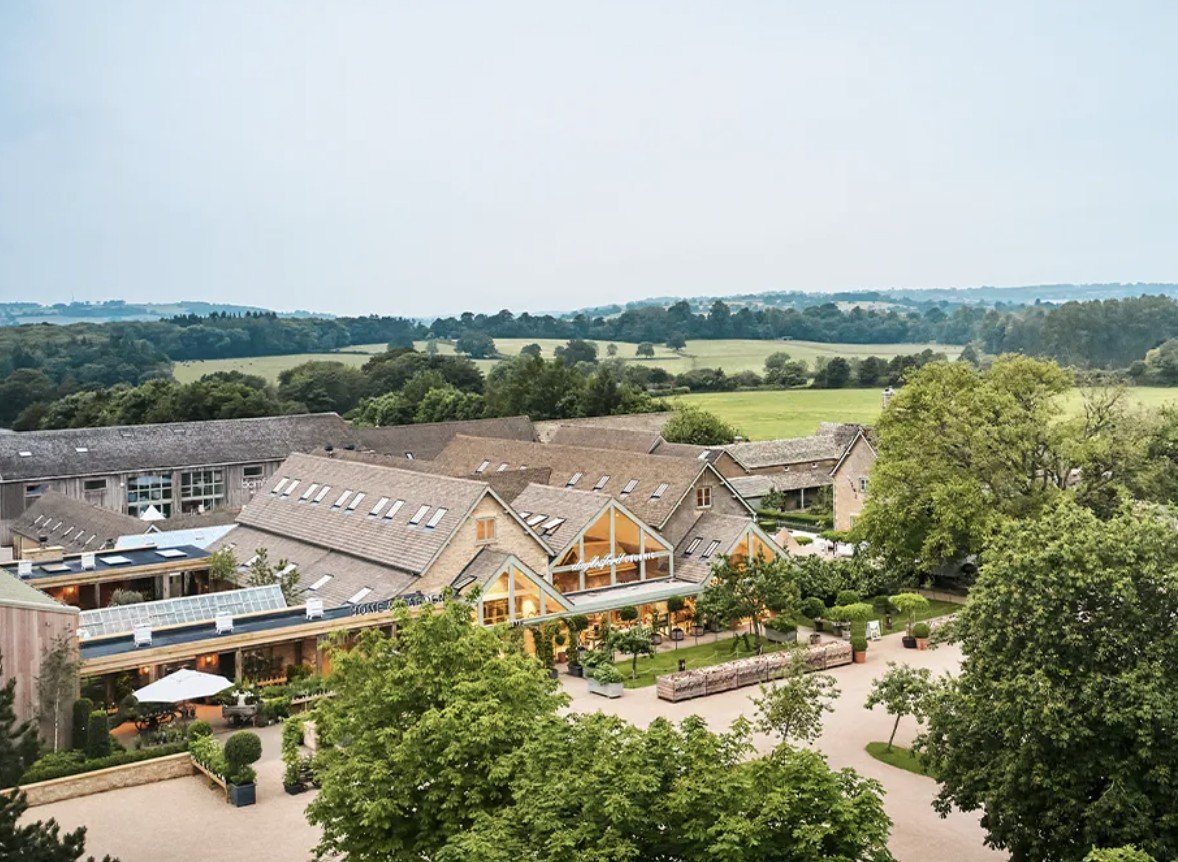
Image from Daylesford
One of the most influential examples sits just outside the village of Kingham.
Daylesford Organic began as a modest farming experiment and has grown into one of Britain’s most recognised organic food brands. Its founder, Carole Bamford, helped pioneer the farm-to-table philosophy long before it became fashionable.
The Bamford family’s keystone success came through engineering giant JCB. Yet Daylesford represents something different, an attempt to reimagine how farming, food and wellbeing might coexist.
Today the estate combines organic agriculture, farm shops, restaurants and a wellness offering that has extended into the broader Bamford brand. What began as a personal interest has quietly shaped the wider conversation around organic farming and sustainable living in Britain.
Seen through this lens, the project anticipated a cultural shift that would only become obvious years later.
As Carole Bamford says:
“My belief that we need to nurture nature and protect and work in harmony with it governs everything that we do at Daylesford; it is the fundamental principle behind every decision I make.”
2) Cotswold Distillery: From hedge funds to English Whisky
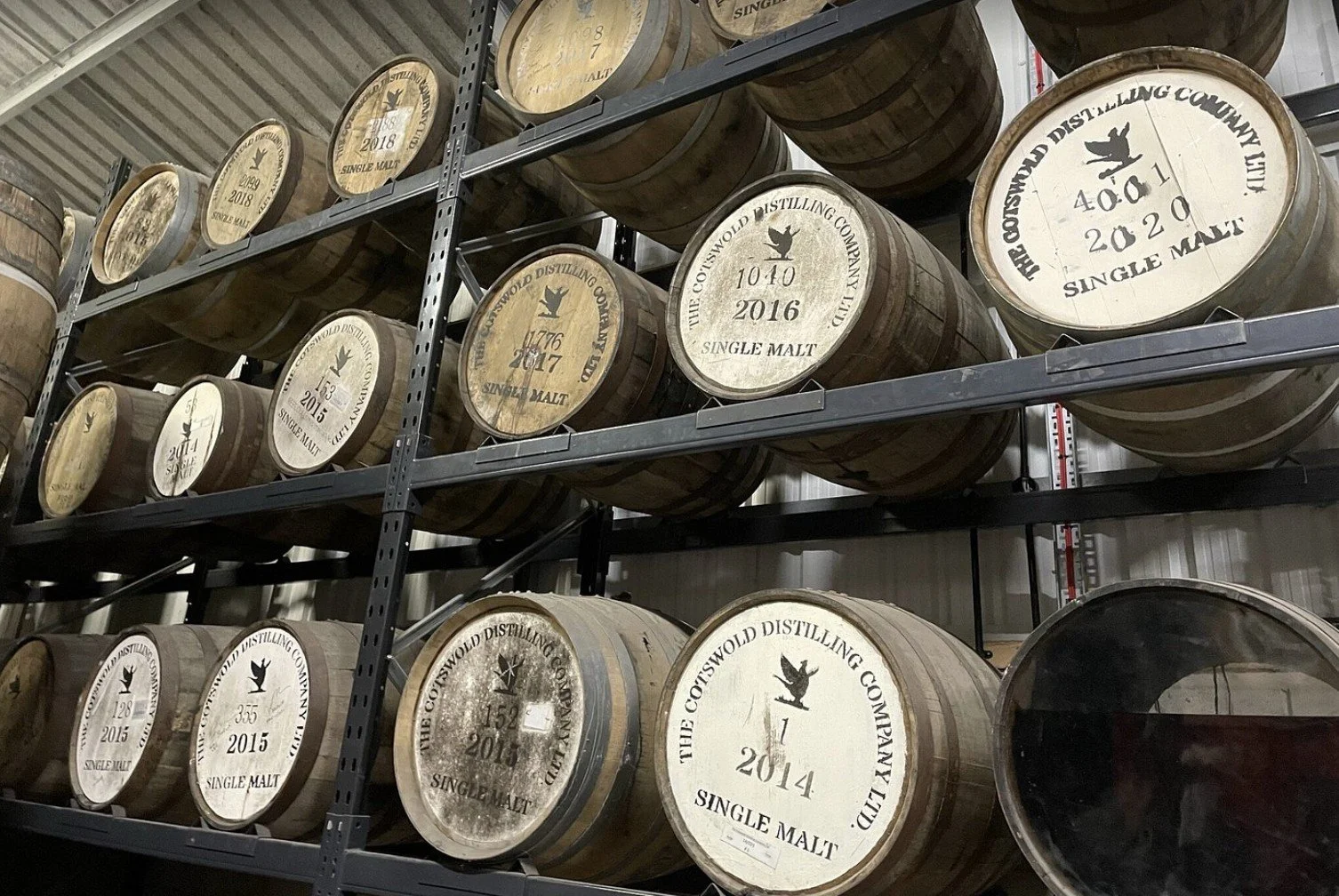
Image from Cotswold Distillery
A similar instinct lies behind the story of Cotswolds Distillery.
Its founder, Daniel Szor, spent much of his career in finance, running a successful hedge fund before swapping Wall Street for the English countryside. Rather than retire quietly, he embarked on an entirely new pursuit: producing world-class whisky and gin after feeling England deserved a distillery it could be proud of.
When the distillery opened in 2014 in Stourton, English whisky was still a curiosity. It was one of the first dedicated whisky distilleries in England in over a century, using 100% locally grown grain.
Today, English whisky is one of the fastest-growing categories in global spirits. Once again, the pattern is familiar. An individual who has already achieved financial success chooses to pursue something more personal, something tangible.
As Szor says:
“I didn’t set out to build a business. I set out to build something I could be proud of.”
“I wanted to create something tangible after years in finance.”
3) Woodchester Valley Vineyard: Planting the future of English wine
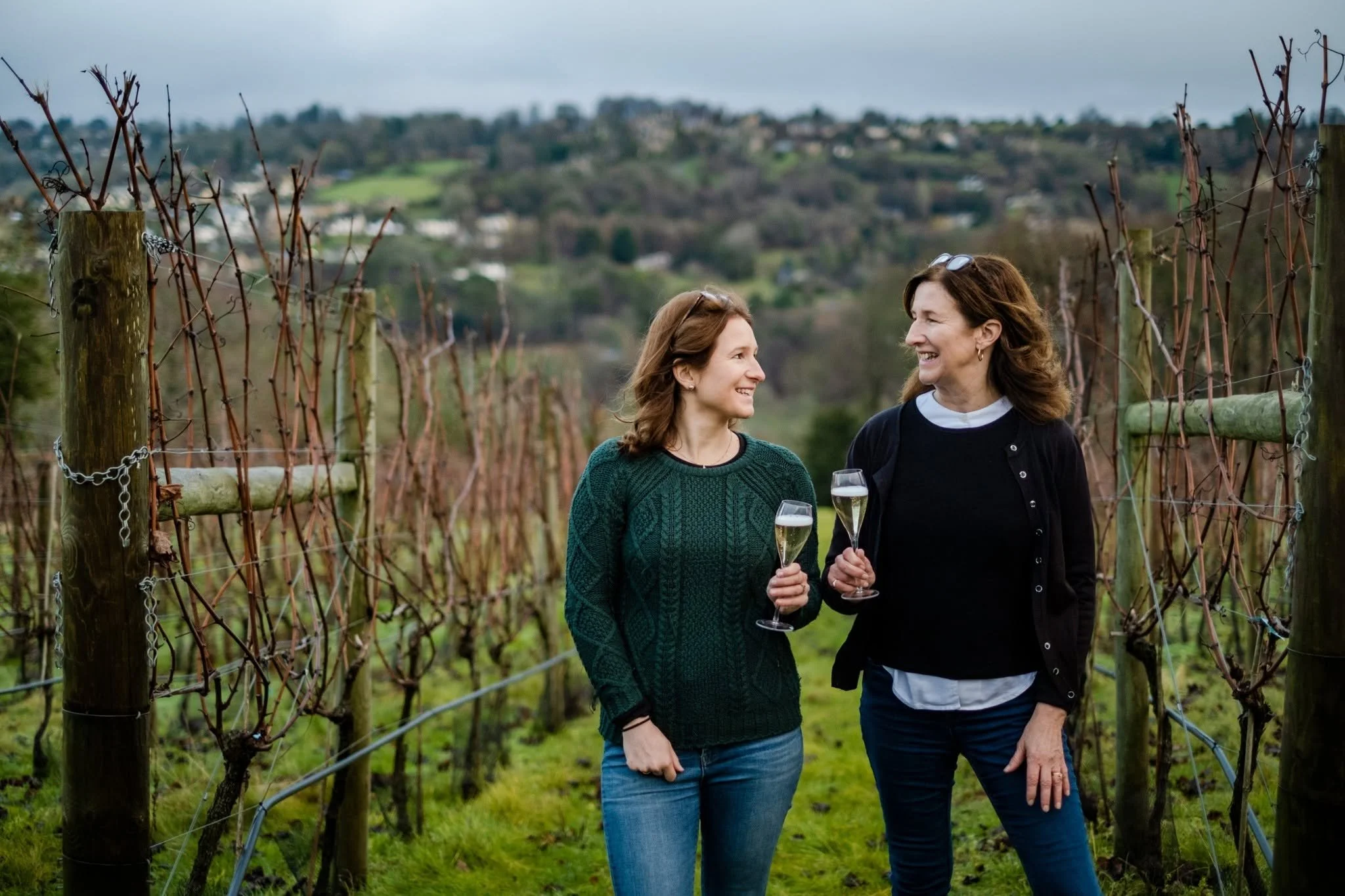
Wine provides another compelling example.
At Woodchester Valley Vineyard, vines now stretch across slopes that would once have seemed unlikely territory for serious winemaking.
Founder Fiona Shiner spent many years in senior legal roles, her husband in finance. After living in Hong Kong for 18 years, they returned home, purchasing land in the Woodchester Valley near Stroud. Inspired by references to vineyards in the Domesday Book, and by the emerging potential of English sparkling wine, she began researching viticulture as a complete novice before planting the first vines in 2007.
As Fiona puts it:
“People thought we were slightly mad planting vines here. But sometimes you have to trust your instincts.”
Cooler climates, improving techniques and patient investment have combined to produce bottles now competing with established European regions. A warming climate has also nudged the wine world northwards, placing the Cotswolds firmly on the map.
Drinking Woodchester’s crisp, aromatic Orpheus Bacchus, I am willing to bet that the future of English wine is Bacchus, our answer to the popularity of Sauvignon Blanc from New Zealand or Sancerre from France. Try a glass in your garden, in the sunshine, with the smell of freshly cut grass, the wine’s zest, lime, hedgerow, elderflower, optimism. It feels exactly right.
Then there is nearby Stroud itself, quietly becoming a hub for these kinds of projects. There is a local movement to “keep Stroud weird”, a desire to preserve its alternative, creative spirit. It has a history of attracting artists and craftspeople. Old Victorian mills and industrial buildings have been converted into artist studios, creating the artisan landscape of the Stroud Valleys. This has led to new passion projects. Projects like fireside tavern The Woolpack, revived by artist Dan Chadwick, reflect that instinct to step in and build something meaningful when others will not.
4) Forest Green Rovers: A football club with a mission
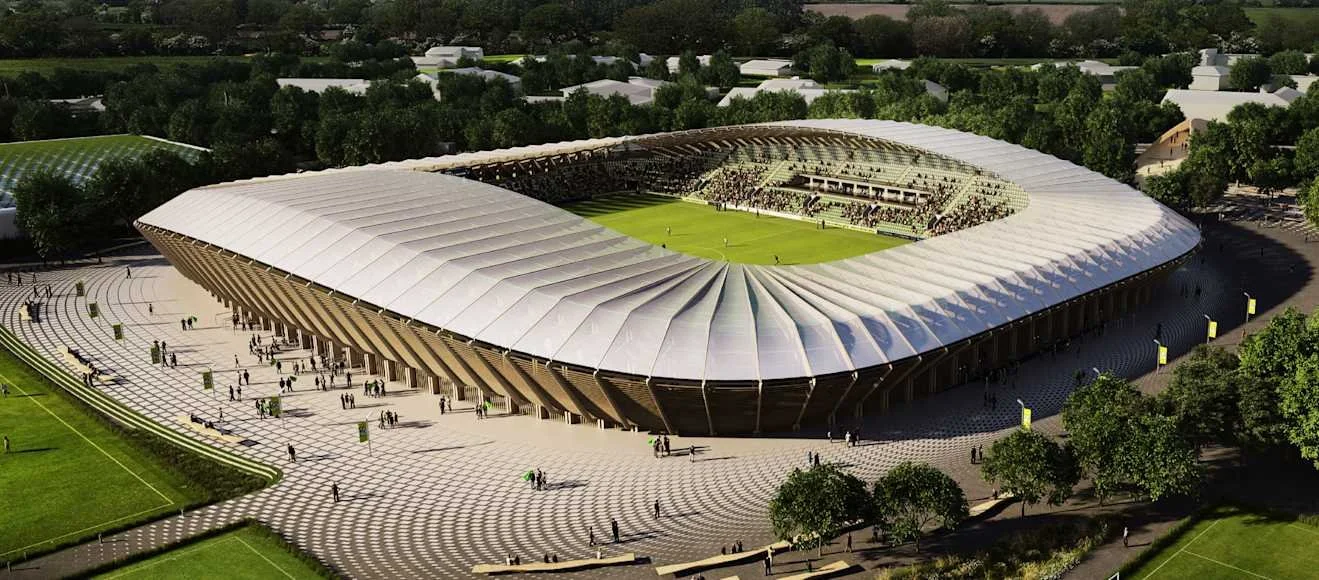
The planned Eco Park wooden stadium
Not all examples are agricultural.
In Nailsworth, just outside Stroud, Forest Green Rovers has become one of the most distinctive football clubs in the world. Its owner, renewable energy entrepreneur Dale Vince, has turned the club into a platform for sustainability.
The team is the world’s first UN-recognised carbon-neutral football club. The pitch is organic. The stadium runs on renewable energy. The food served is entirely vegan. Plans are underway for a new stadium constructed largely from wood.
Professional sport rarely leads environmental change. Yet here, football becomes the vehicle for that conversation. FIFA has described it as “the world’s greenest football club.”
As Vince says:
“Football has an enormous platform. Why not use it to talk about the biggest issue of our time?”
“We’re not just talking about sustainability, we’re doing it.”
5) Clarkson’s Farm: An agricultural adventure
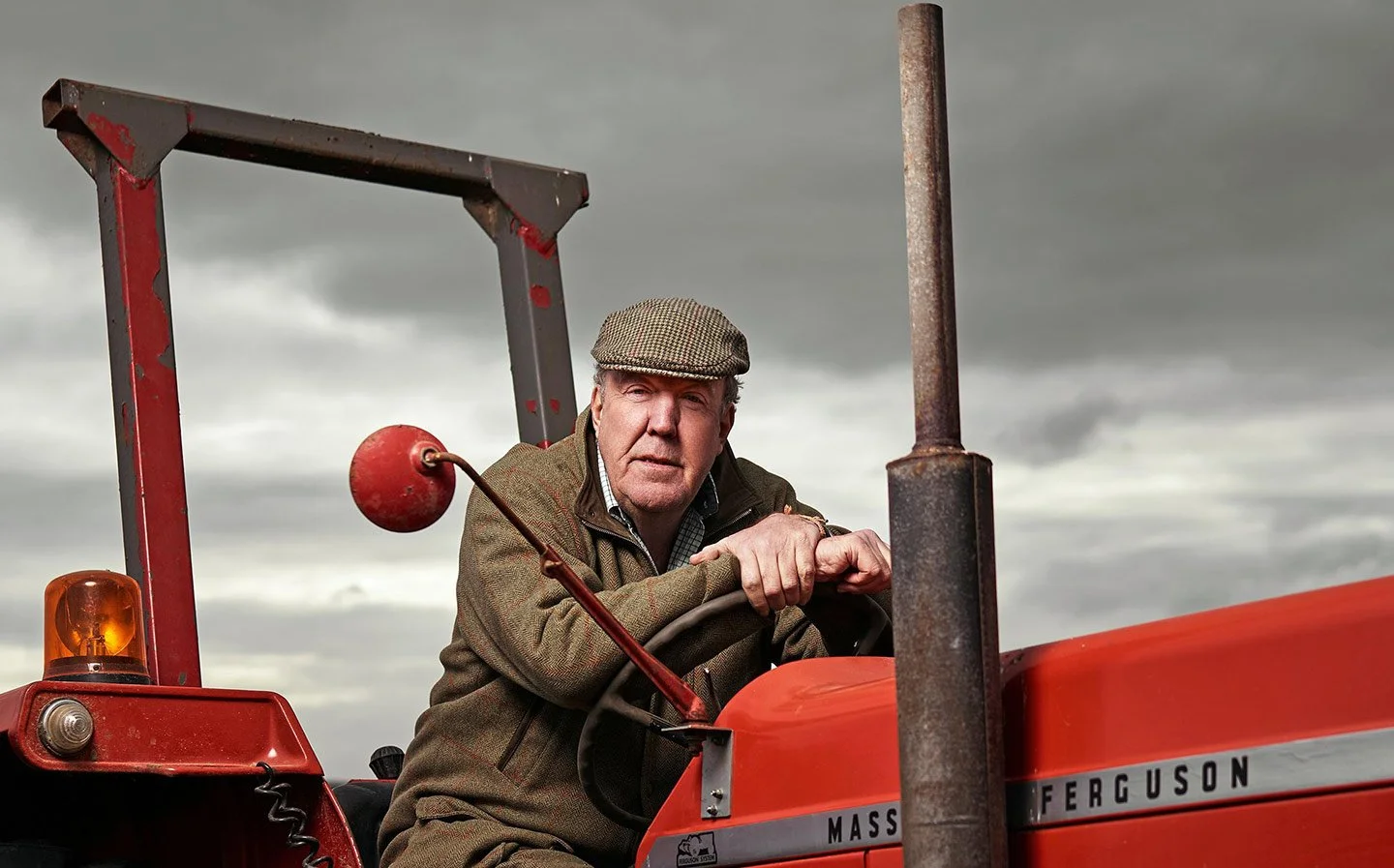
Clarkson’s Farm: One of the most popular TV series in the UK
Just outside Chadlington in Oxfordshire, farming has taken an unexpected turn into television.
Clarkson’s Farm follows the agricultural journey of broadcaster Jeremy Clarkson on his Cotswold farm. What began as a personal experiment has evolved into one of the most watched factual series on Prime Video in Britain.
The success of the series lies in its honesty. It captures not just Clarkson’s learning curve, but the realities of rural life, the pressures on farmers, and the interdependence of local communities.
The project has since expanded into a farm shop, restaurant and pub, drawing a new and highly engaged audience into the world of rural Britain. The programme entertains, but it also educates. It has fed into wider public discussions around farming policy and regulation.
As Clarkson admits:
“Farming is much harder than it looks.”
“It’s been the steepest learning curve of my life.”
“I now know why farmers drink.”
Clarkson is not alone. Alex James, bassist of Blur, has also built a farm nearby in Kingham, producing award-winning cheeses and hosting the annual Big Feastival music festival.
6) Pit Kitchen: Food from the fire
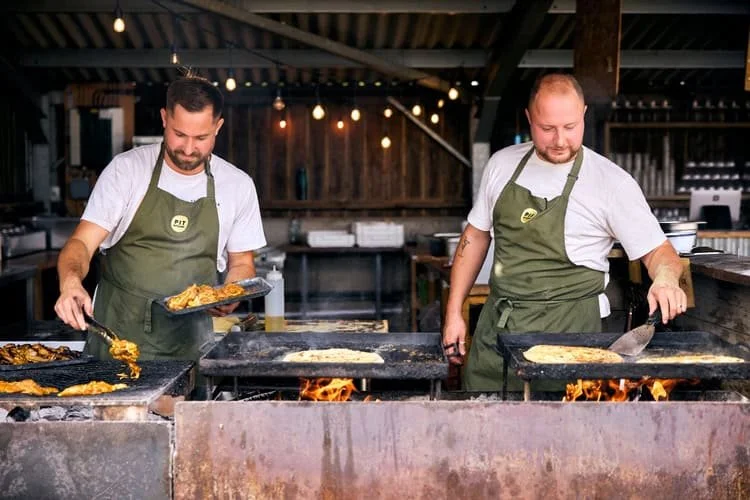
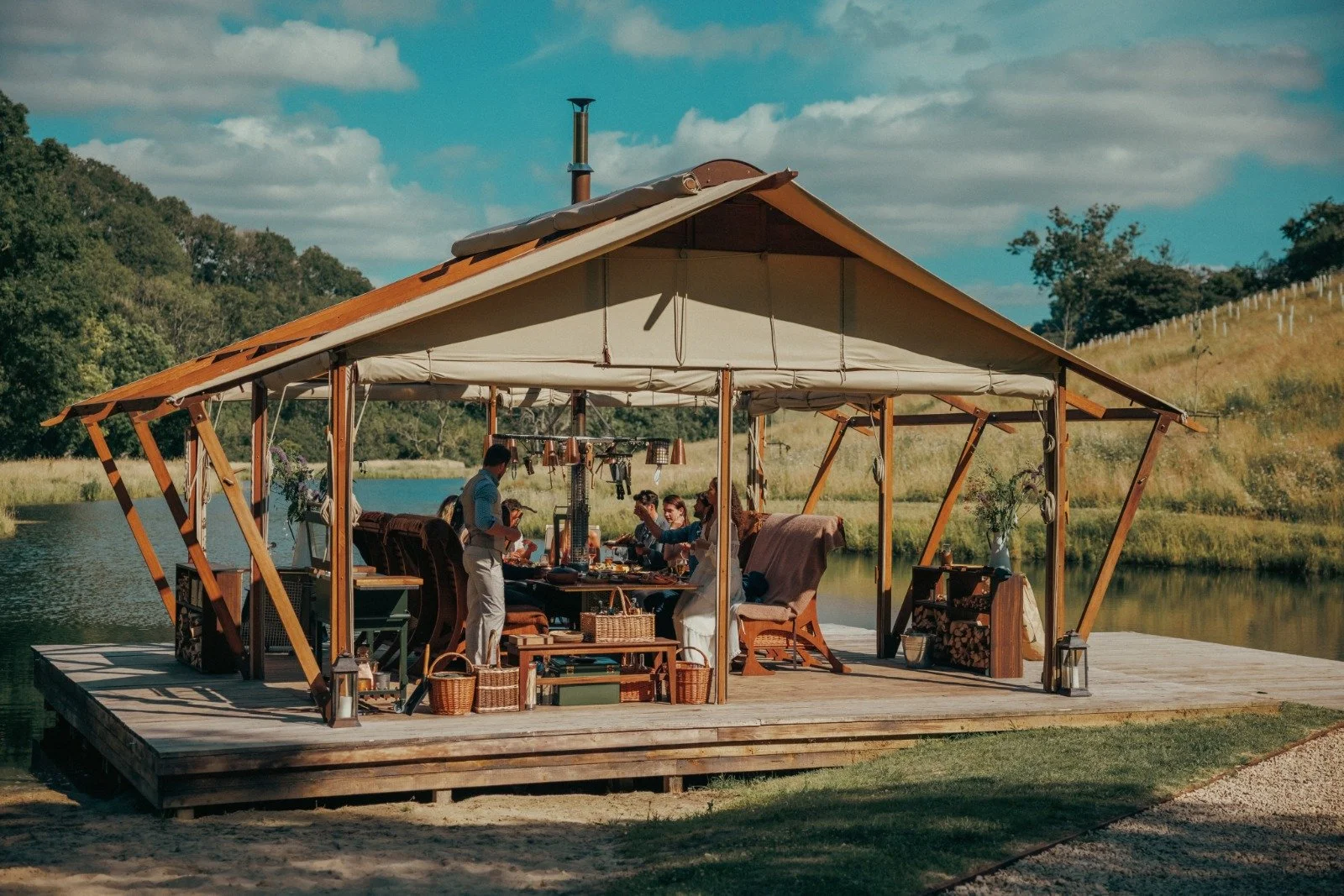
Image courtesy of Pit Kitchen
Not all projects require scale or acres.
Just outside Moreton-in-Marsh, Pit Kitchen has emerged from the passion of two brothers determined to recreate the food culture they experienced in East London.
Open-fire cooking, long communal tables and seasonal ingredients define the experience. It is simple, but deliberate.
As they explain:
“After eight years living in East London, we fell in love with the food culture there, and wanted to recreate some of that magic back home.”
7) Gloucester Services: Redefining the service station
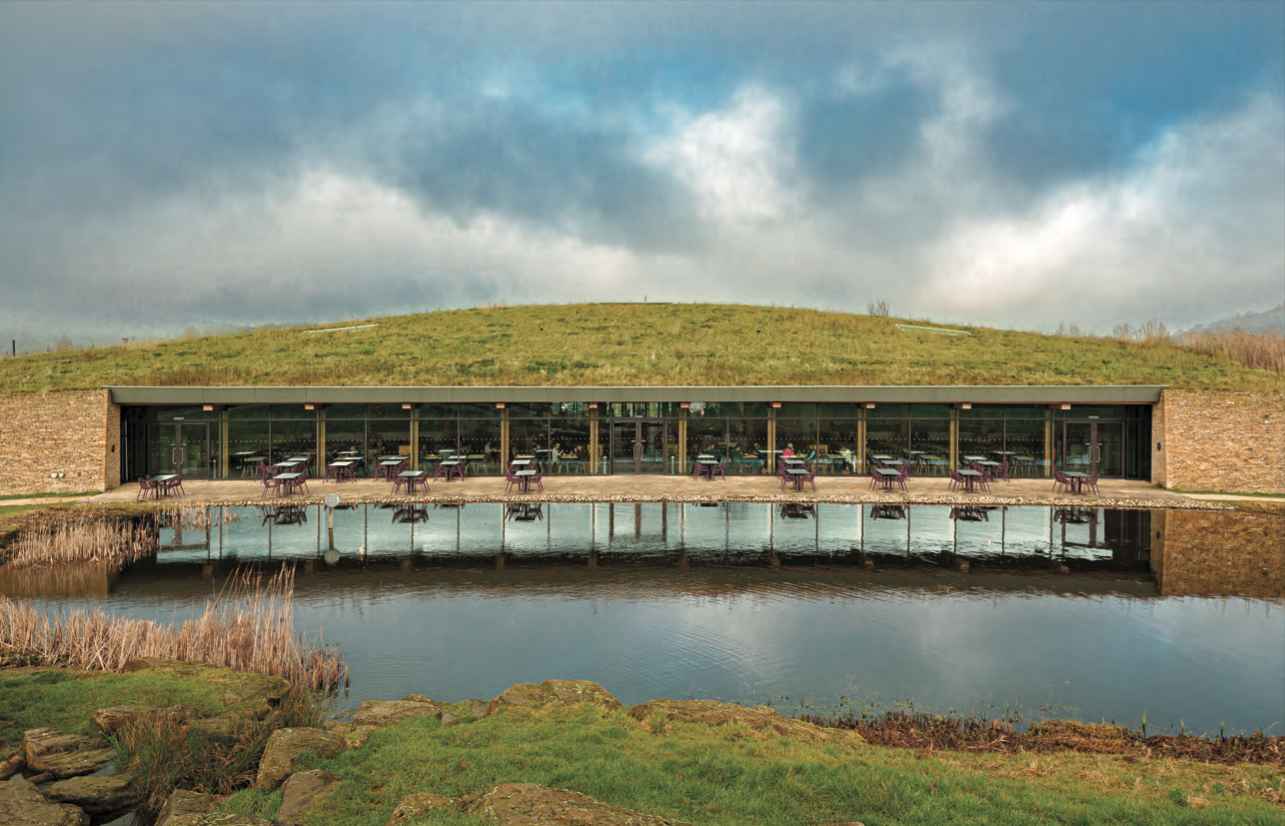
Image from: Architecture Today
A service station might seem an unlikely candidate for this curation. Yet Gloucester Services, on the M5, is one of the most quietly impressive examples.
Instead of a generic roadside stop, the building is embedded into the landscape, with grass-covered roofs blending into the surrounding hills. Inside, it showcases local produce and reinvests profits back into the community. It has an immediate sense of place.
As the founders put it:
“Motorway services should reflect the place they are in.”
The project has even won national architecture awards, recognition that something as unlikely as a motorway service station can be thoughtfully designed and rooted in its landscape. I wish every service station was like this, offering the best of local produce and giving each stop its own regional identity.
8) Jackdaws Castle: In racing heartland
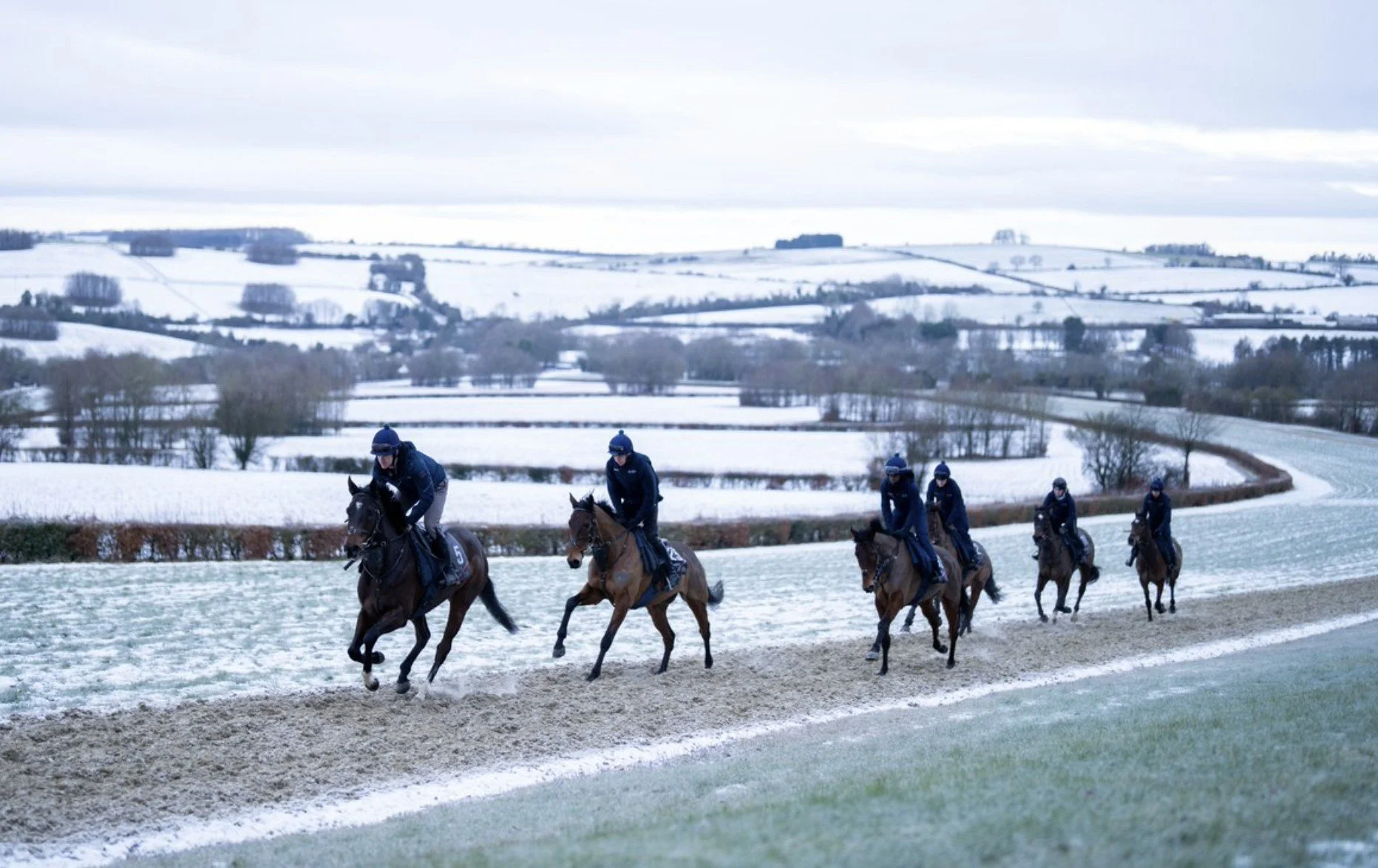
Image: Racing Post
The racing industry is deeply embedded in the fabric of the Cotswolds.
For some, racehorse ownership becomes a lifelong pursuit. Irish businessman JP McManus is one of the most recognisable figures in the sport. After building substantial wealth, he devoted decades to racing.
His horses train at leading yards such as Jackdaws Castle, one of the finest facilities in National Hunt racing, located near Cheltenham.
At this level, ownership is rarely about financial return. It is about excellence, patience and the rhythm of competition. McManus is widely recognised as keeping many yards, and therefore many jobs, afloat by distributing horses across stables from the very top to the relatively small.
As McManus says:
“You don’t do this for the money. You do it for the love of the game.”
9) The Post: Rooted in local life
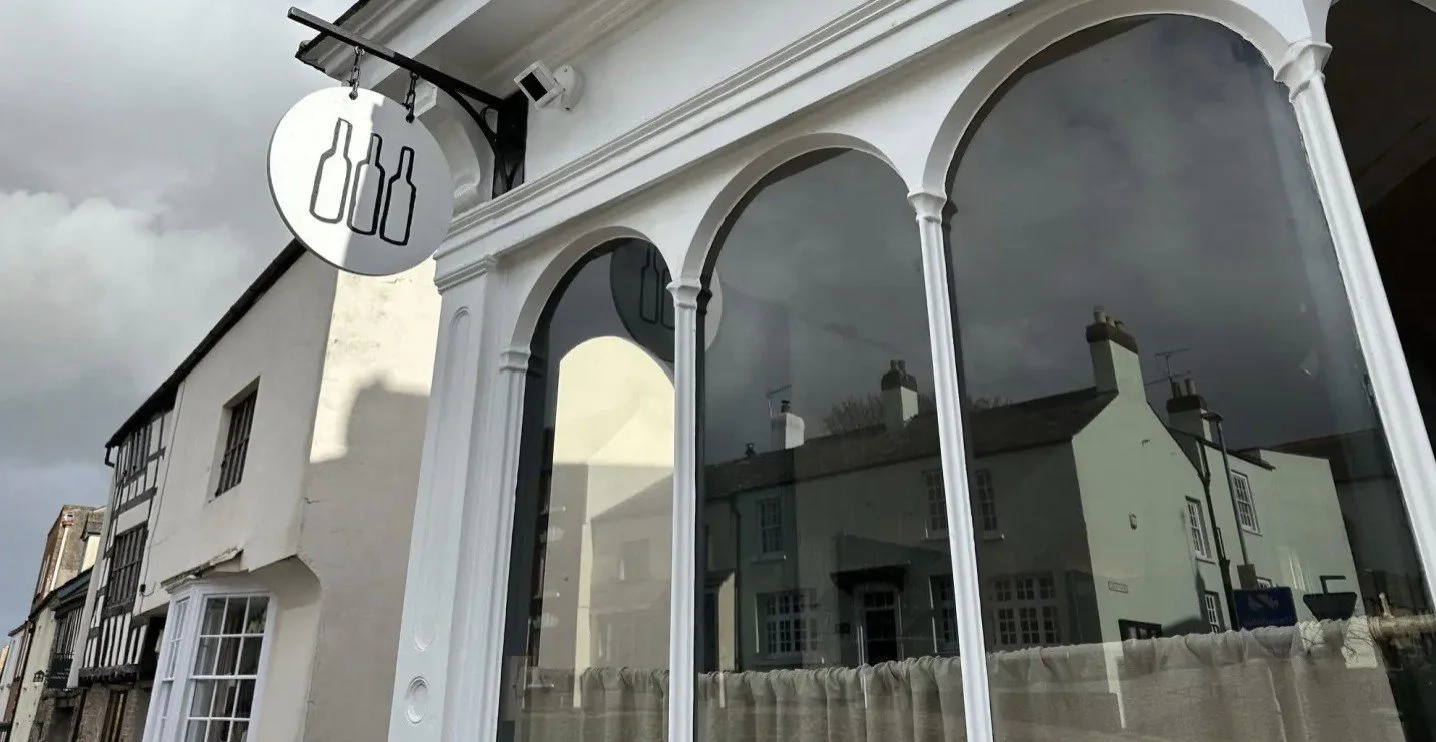
Image: So Glos
In the village of Newnham-on-Severn sits one of the most charming small restaurants in the region.
The epitome of a local Capstone. The Post began life as the village post office before being transformed into a restaurant and wine bar by husband-and-wife team Ben Thompson and Florence de Maré, designers who moved to the banks of the Severn and reimagined the building as a local bottle shop and bistro celebrating regional produce.
In many ways it captures the spirit of the modern Cotswolds perfectly: rooted in local life but ambitious enough to attract attention far beyond it.
As Florence explains:
“We wanted to create somewhere that felt rooted in the village but was also a destination people would travel for.”
10) The Cotswolds Gentleman: Celebrating great pubs
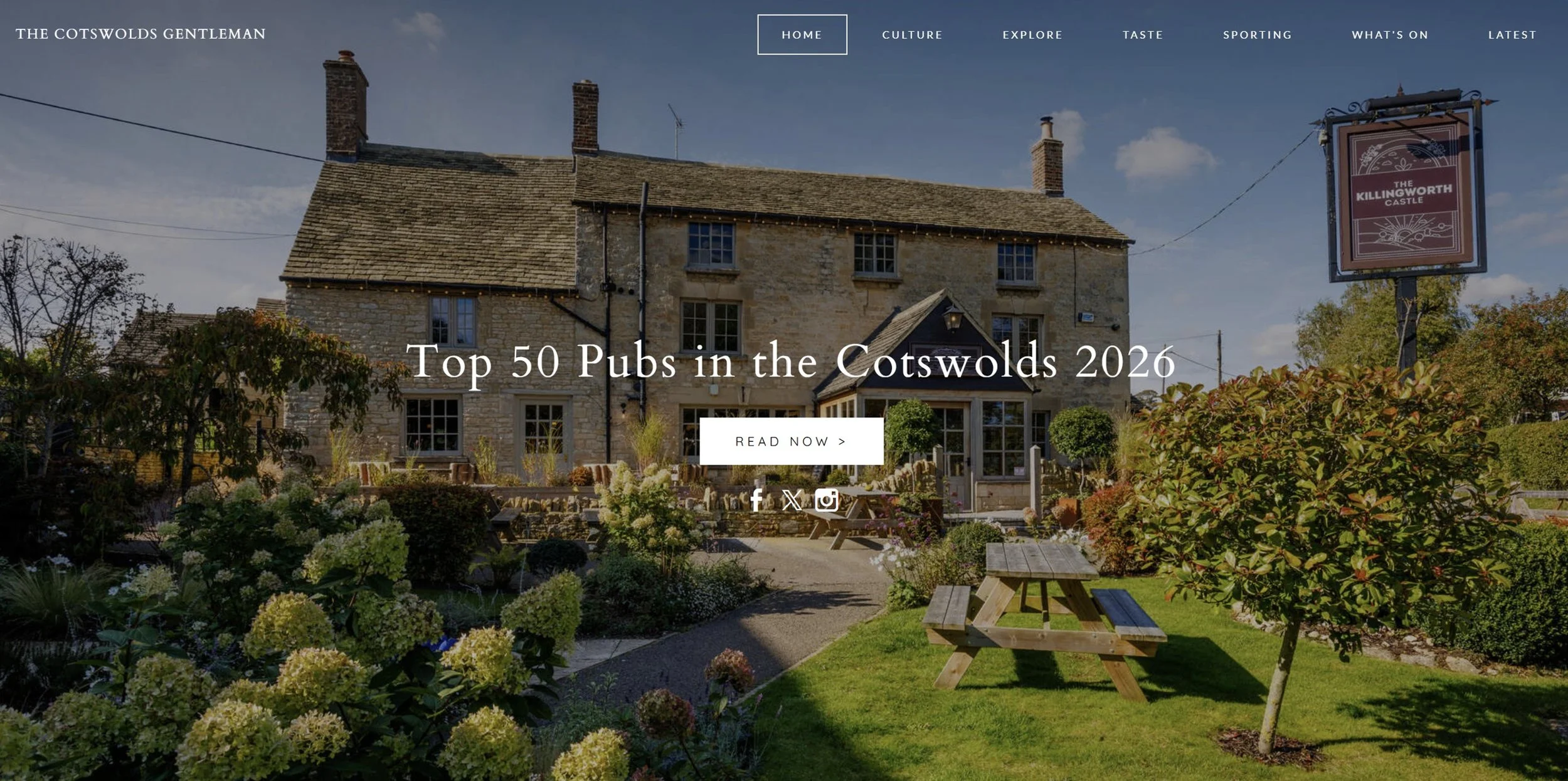
Image: The Cotswold Gentleman
The Cotswolds Gentleman, created by Tom Arkell, is a digital guide celebrating the region’s best pubs. Its annual Top 50 list attracts a large and loyal readership.
What began as a personal curation has become a trusted voice within Cotswolds pub culture. A fine media Capstone.
As Arkell puts it:
“The Cotswolds has some of the finest pubs in the country and the guide is really about celebrating them.”
“This guide is a real passion project and something we’re incredibly proud of each year.”
FINAL THOUGHTS: A LANDSCAPE OF POSSIBILITY
Taken individually, these projects might appear unrelated. A distillery. A vineyard. A football club. A service station. A farm. But together, a pattern emerges.
People arrive in the Cotswolds after their keystone achievements. Surrounded by nature, heritage and, in places like Stroud or Chipping Norton, a certain creative edge, they begin to explore ideas that feel more personal.
Some projects scale. Others remain deliberately small. But each reflects a deeper motivation than profit alone. Many extend beyond the individual. They shape local communities, influence industries and, in some cases, act as prototypes for broader change.
Often the best projects bring out the best in a place. The Cotswolds seems to amplify this more than most. Perhaps it is the land. Perhaps it is the pace. Or perhaps it is what happens when people finally have the freedom to choose what to build next.
This is what I see each year when I return. And once you learn to recognise them, you begin to see them everywhere across these hills.
Discover more