~ Capstones as bolts of lightning ~
On the beautiful corners of France where places capture hearts and inspire extraordinary passion projects.
In the Awareness section of my book Capstones, I introduced a line that I believe is fundamental to the beginnings of any meaningful passion project: “Start with the heart, end with the spend.”
Before the business plan, the spreadsheets or the financial commitment, there ought to be some rather more personal questions. What matters to me? What am I drawn towards? What gives me energy? What is missing? What do I care enough about to commit myself to?
The importance of passion coming first in a project....
I also believe that there are Capstone Corners of the world: places where there seems to be a higher density of people undertaking meaningful passion projects. The Cotswolds is one. The Alps is another. Most recently, Nashville was a new Capstone corner discovered. There are pockets of Provence, Tuscany, the Dordogne and California where something similar seems to happen. They are places where landscape, architecture, history, craft and culture have accumulated over generations and where, perhaps as a consequence, people are more likely to arrive and feel compelled not simply to visit, but to create.
The density and distinction interests me.
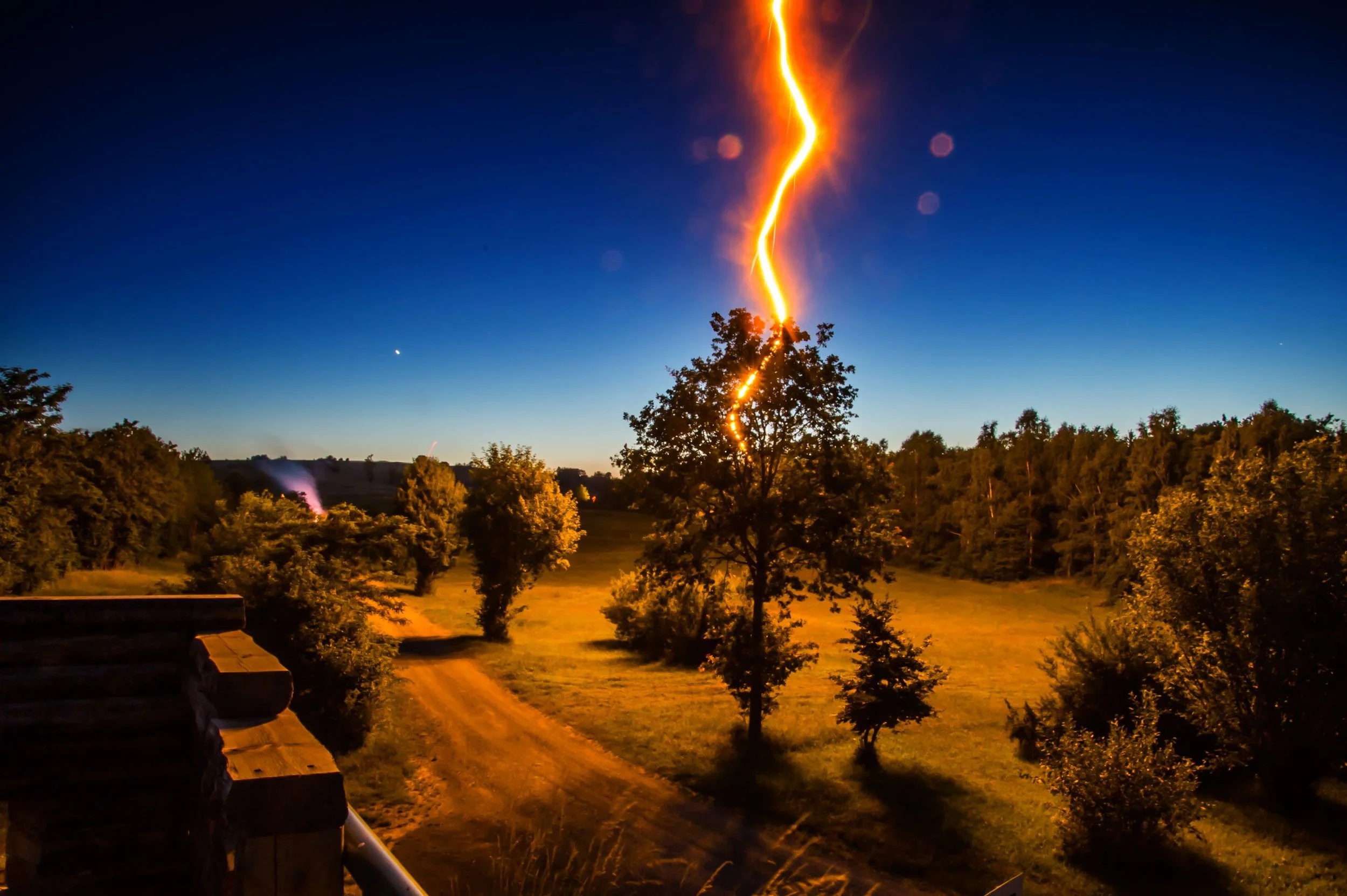
Image credit: Kemal Christian Catovic
TO HAVE ONE’S HEART AT PEACE
A Capstone often begins before there is a business plan, a spreadsheet or even a particularly clear idea of what the project might become. Something is felt first. The head catches up later. The person knows, at some level, in their heart of hearts, that there is something here for them.
I've been noticing this repeatedly in some of the Capstones I've written about in France. Perhaps that's hardly surprising in a country so often associated with passion, taste, instinct, beauty and emotional conviction. But what I've found particularly interesting is that the French language seems to have an expression for almost every variation of this emotional response.
At Château du Rayet, close to Villeréal and Monpazier in the countryside on the edge of the Dordogne, Gareth and Becky Rees found a place whose defining characteristic for them was tranquillity. Today the Château describes itself as somewhere offering complete privacy and tranquillity, surrounded by the beautiful countryside of south-west France. I write about it HERE.
There is a French expression that seems to suit Rayet rather nicely: avoir le cœur en paix:
… to have one's heart at peace.
It is quieter than falling in love. There is no thunderclap. It is the sense that somewhere feels right; that the noise subsides a little when you arrive.
Next I moved southeast to the Gulf of Saint-Tropez and the emotional response becomes considerably more dramatic.
When Régine Sumeire acquired the run-down vineyard Château Barbeyrolles in 1977, the estate's own history describes her reaction explicitly as un coup de foudre. The property lies at the foot of Gassin, itself one of France's officially recognised most beautiful villages, appearing on the Les Plus Beaux Villages de France list. What followed required years of patience and determination to awaken what the estate describes as a sleeping vineyard.
Coup de foudre literally means a bolt of lightning. In matters of the heart, it means love at first sight, but it describes something broader too: that instantaneous moment when rational evaluation is overtaken by certainty.
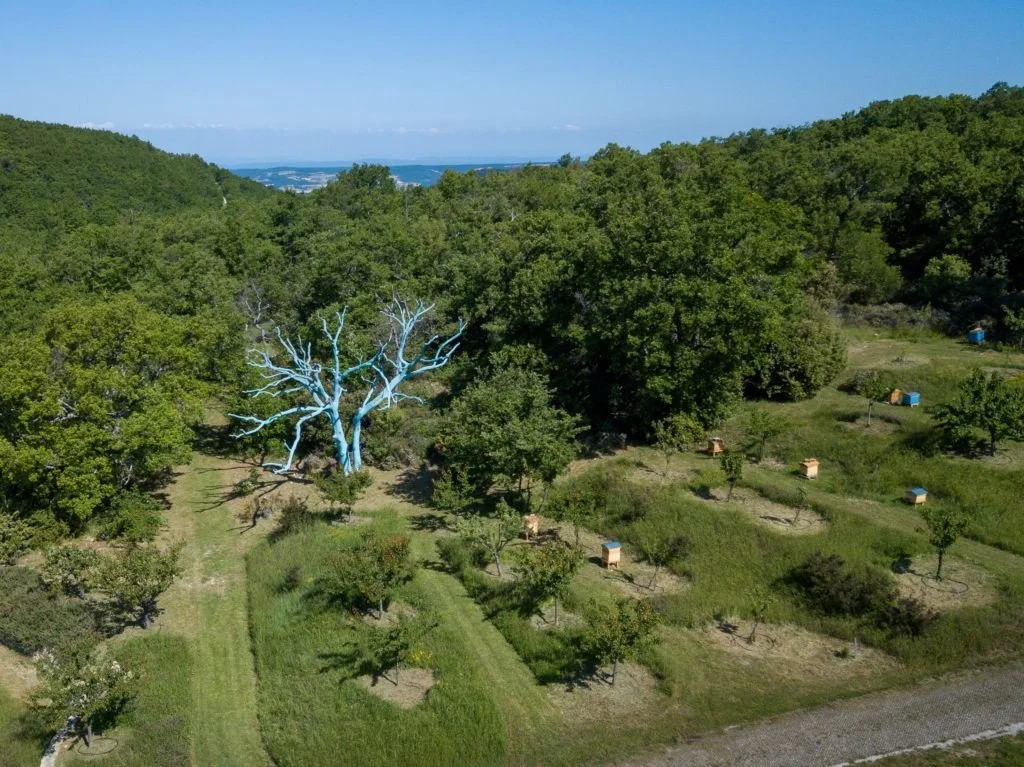
Image credit: Travel Curios Often
BLOW TO THE HEART
Travelling west towards the Minervois brings me to Robert “Bertie” Eden and Château Maris. Eden has recalled travelling down from Burgundy and simply falling in love with the region. He kept tasting the wines of La Livinière, became increasingly intrigued by them and eventually bought Château Maris there in 1997. I write about it HERE.
Nearby Minerve rises dramatically from the limestone landscape above the Cesse and Brian gorges, surrounded by the very Minervois vineyards that had attracted Eden. It too is one of Les Plus Beaux Villages de France.
Eden's response is closer to the French saying coup de cœur. Literally a “blow to the heart” although in everyday French it describes something that wins your heart: a place, object, idea or experience to which you find yourself emotionally drawn.
Then there is Chêne Bleu, the extraordinary project created by Xavier and Nicole Rolet around the medieval priory of La Verrière in the hills of the Vaucluse.
Xavier Rolet's account of discovering it could almost have been written specifically for this idea. In 1994 he spotted a weathered photograph of the property in an estate agent's window, followed a rough road into the forest and eventually emerged into a clearing containing vineyards and the ruins of the ancient priory. He fought his way through the overgrowth and into the medieval buildings.
Then, in his own words, “My heart started to pound.”
The French have an expression for that too: le cœur qui bat la chamade: the heart beating wildly or racing with emotion.
The Rolets subsequently spent years bringing the medieval property and vineyard back to life. Their own shorter history says simply that Xavier “fell in love and decided to set down roots in this land.”
And once again there is a familiar geographical clue. La Verrière sits in the same Dentelles de Montmirail landscape as Séguret, another of Les Plus Beaux Villages de France. This feels like more than coincidence.
My belief is exceptionally beautiful places can attract the Capstone mindset. They contain the ingredients that make people stop, look again and begin imagining. Old buildings, vineyards, workshops, farms, neglected estates and pieces of history are embedded in landscapes that already carry centuries of accumulated meaning.
The village itself does not have to be the Capstone. It is more like a marker that you may have entered a Capstone Corner of the world.
This is what makes France's network of Les Plus Beaux Villages de France so interesting. Its 1866 villages might inadvertently form a map of places where some of these conditions are unusually concentrated: beauty, heritage, distinctiveness, craftsmanship, landscape and a strong sense of place. And the language that keeps appearing around the people drawn to these places is strikingly consistent.
Avoir le cœur en paix: the heart is at peace.
Coup de cœur: the heart is won.
Battre la chamade: the heart starts racing.
Coup de foudre: the lightning bolt strikes.
Different intensities of essentially the same phenomenon. The heart is won first. Then the head has to work out how to make the project happen.
There is then a fifth expression which completes the story: tenir à cœur: something that matters deeply to you; a cause that is ‘close to your heart’.
Then to go full circle, Les Plus Beaux Villages de France itself turns out to be a Capstone. It began not as a government tourism initiative or a branding exercise but with one man, one village and something he cared about.
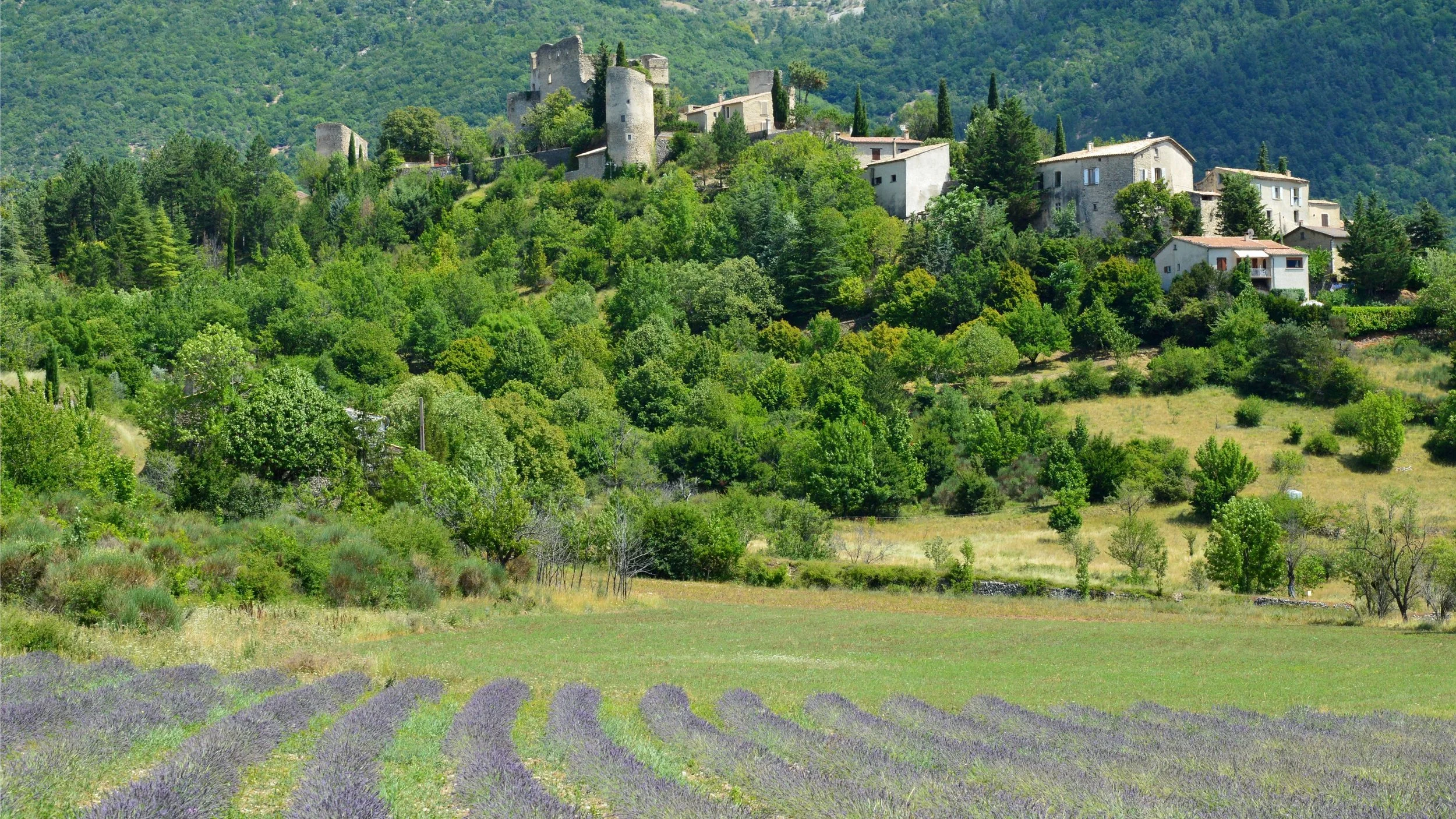
Image credit: SlimMars13
In 1981 Charles Ceyrac, then mayor of Collonges-la-Rouge in Corrèze, encountered a Reader's Digest book called Les Plus Beaux Villages de France. His own village appeared in it. Ceyrac was concerned about the decline of rural communities and the loss of remarkable architectural heritage, and the book gave him an idea.
The association's own history describes it beautifully. Ceyrac saw an opportunity to serve “une cause qui lui tient à cœur”: a cause close to his heart… bringing together energy and passion to protect and promote these exceptional villages and offer them an alternative to rural decline. He wrote to around a hundred mayors whose villages appeared in the book, 66 of which joined him.
So on 6 March 1982 they formally created Les Plus Beaux Villages de France. More than four decades later there are 186 villages across 14 regions and 72 departments, united around essentially the same purpose: protecting exceptional places, preserving their character, promoting them intelligently and helping living communities benefit from their heritage rather than allowing it to disappear.
Seen through the lens of Capstones, Ceyrac's project has almost everything: personal meaning, preservation, collaboration, long-term thinking and a desire to create something that benefits others and continues beyond its founder.
I began looking at Les Plus Beaux Villages de France because I wondered whether their locations might help identify Capstone Corners: beautiful parts of France where people seem unusually prone to falling for a place and undertaking extraordinary passion projects nearby. It turns out that the organisation which created the map was itself born from the same impulse!
It also describes the different beginnings of passion projects... Not everybody has the lightning bolt. Sometimes somewhere simply feels right. Sometimes curiosity accumulates. Other times the response is visceral, the heart racing before the head has a chance to catch up. But in each case, something has stirred a person sufficiently to turn emotion into action. And that is often where the most meaningful Capstones begin.
Perhaps that is the real characteristic of a Capstone Corner. They are places where the landscape does more than please the eye… It moves the heart sufficiently that somebody decides to do something about it.
This summer I have found that France has rather a lot of Capstone Corners that are particularly good at doing that!
Discover more